










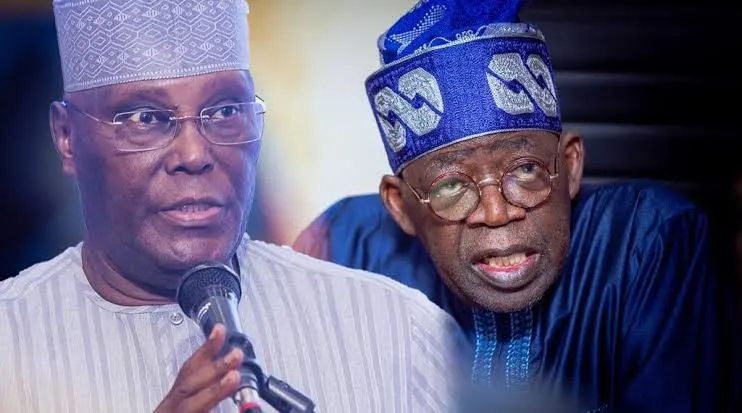
The Presidency has dismissed former Vice President and ADC presidential candidate Atiku Abubakar’s claim that Nigeria’s borders are closed, describing it as misleading and insisting that the land borders remain open.
The Presidency said the Federal Government reopened most land borders on March 14, 2024, and had not reversed the decision.
This is contained in a statement titled “Atiku and the borders: Nigerians deserve facts, not campaign slogans”, issued by Mr Sunday Dare, Special Adviser to the President on Media and Public Communication, in Abuja.
Dare was reacting to Atiku’s recent declaration that he would “open the borders” immediately upon assuming office.
“The facts are straightforward: Nigeria’s land borders are already open. It is therefore difficult to understand which borders the former Vice President intends to ‘open’.”
He said that if Atiku intended to relax existing border controls, Nigerians deserved to know which controls he would remove and why.
He also asked the former Vice President to explain the safeguards he would deploy against terrorism, arms trafficking, smuggling, human trafficking and other transnational crimes.
Dare noted that President Bola Tinubu had, on Feb. 14, 2026, opened the Kamba border in Kebbi State, with attendant economic and diplomatic benefits.
“The distinction between an open border and an uncontrolled border is fundamental to responsible national security and economic policy,” he said.
Dare said modern border management was designed to facilitate legitimate movement, trade and economic interaction while preventing criminals and terrorist organisations from exploiting the same channels.
“Effective border governance requires immigration control, customs administration, intelligence-sharing, surveillance, technology and coordinated security operations,” he said.
The presidential aide said Nigeria’s northern security environment could not be divorced from developments across the Sahel and Lake Chad Basin.
He noted that Nigeria shares borders with Niger, Chad and Cameroon, making cooperation with neighbouring countries essential to addressing transnational security threats.
“As Atiku rightly acknowledged, Nigeria shares borders with Niger, Chad and Cameroon. The region continues to confront terrorism, violent extremism and transnational organised crime.”
Dare said criminal networks could exploit porous borders to move people, weapons and other illicit materials across countries.
