










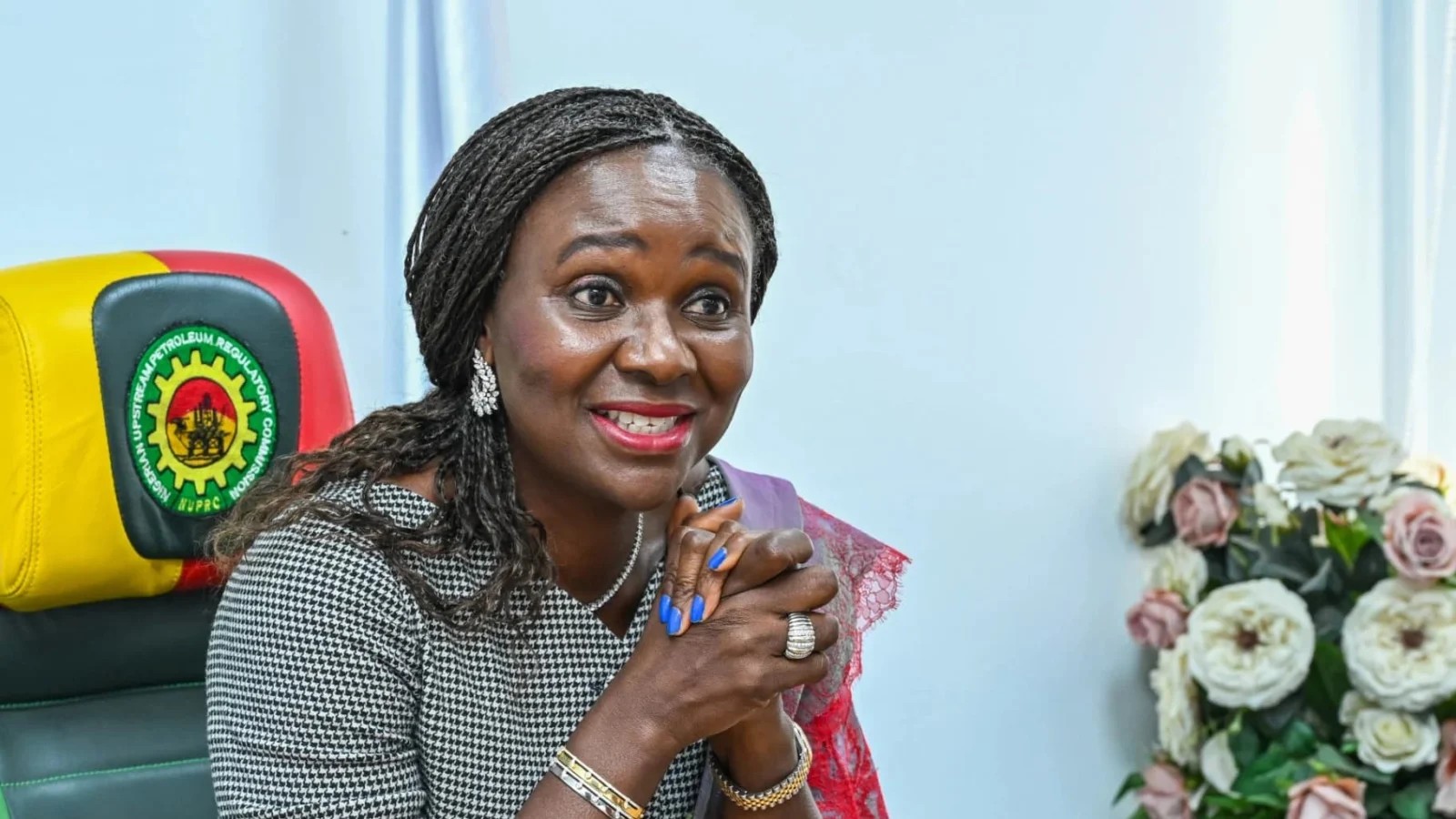
The Nigerian Upstream Petroleum Regulatory Commission (NUPRC) says Nigeria is committed to ending routine gas flaring by 2030, citing stricter penalties and efforts to commercialise flare gas.
The commission’s Chief Executive, Oritsemeyiwa Eyesan, stated this at the 3rd Emogas International Natural Gas-Based Industry Conference and Exhibition (EINGICE) in Abuja on Wednesday.
She was represented by Mr Janice Anyanwu, Deputy Director, Gas Utilisation at NUPRC.
Eyesan said gas flaring had declined from about 90 per cent of production in the past to approximately seven per cent, with about 500 million standard cubic feet flared daily.
She attributed the reduction to stricter penalties and efforts to commercialise flared gas, but identified inadequate infrastructure, high investment costs and low gas volumes at some sites as obstacles to ending routine flaring.
Eyesan said the commission launched the Nigerian Gas Flare Commercialisation Programme in 2021, auctioning 42 flare sites to third-party investors.
The projects include mini-Liquefied Natural Gas (LNG) plants and Liquefied Petroleum Gas (LPG) facilities.
She said the Petroleum Industry Act standardised the gas-flaring penalty at two dollars per thousand standard cubic feet, with additional penalties for operators exceeding approved thresholds.
Eyesan said Nigeria’s proven gas reserves stood at 215.19 trillion cubic feet (TCF) as of Jan. 1, giving the country an estimated reserve life of 85 years.
She said Nigeria produced an average of 7.42 billion standard cubic feet daily in 2025, with about 92.4 per cent utilised.
She attributed investor interest to reforms, including Executive Order 40 of 2024, and cited the Ubeta, HI and Ima gas projects, whose combined prospective production capacity is about one billion cubic feet daily.
Eyesan said the commission was advancing a gas-swap framework and had launched a licensing round offering 40 blocks to attract investment.
Meanwhile, Dr Ainojie Irune, Managing Director of Oando Energy Resources Nigeria Ltd., said Africa must move beyond celebrating gas reserves and focus on reliable supply, investment and value creation.
