By Peter Dama
Nutrition experts and stakeholders in the food sector are drawing renewed attention to the growing challenge of “hidden hunger” in Nigeria, warning that millions of people may be eating daily meals without receiving the vitamins and minerals required for healthy living.
Hidden hunger, also known as micronutrient deficiency, remains a major but less visible form of malnutrition affecting women, children and vulnerable households across the country.
Although many families are able to access food, experts say the quality of that food often falls short of supplying essential nutrients needed for growth, immunity, learning and productivity.
Recent national reports, including the Nigeria Demographic and Health Survey and the National Food Consumption and Micronutrient Survey, indicate that malnutrition continues to pose a serious public health concern in the country.
Available data show that nearly four in every 10 Nigerian children are stunted as a result of poor nutrition, while large numbers of women and children suffer from iron deficiency anaemia.
Health professionals say anaemia contributes to fatigue, poor concentration, reduced school performance, low productivity among adults and increased risks during pregnancy.
They also warn that deficiencies in iron, zinc, folic acid and key B-vitamins weaken immunity and increase vulnerability to illness across many communities.
What makes the challenge more alarming, experts note, is that it is not always immediately visible.
A child may appear fed, a worker may eat regularly, and a household may have meals on the table, yet the body may still be deprived of the micronutrients needed to function optimally.
It is for this reason that nutrition specialists describe the condition as hidden hunger.
As concern grows over how to address the burden, attention is increasingly turning to one food that is already central to the Nigerian diet — rice.
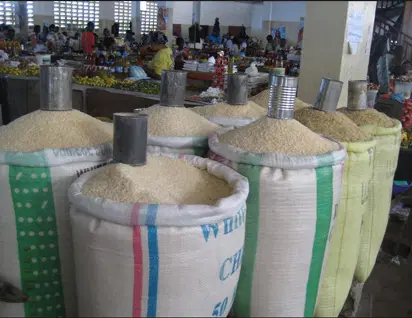
Rice has become one of the most widely consumed staples in Nigeria, eaten in urban and rural homes, schools, workplaces, ceremonies and humanitarian settings.
Because of its widespread acceptance, food policy experts say rice provides a strategic vehicle for improving nutrition without requiring people to change their eating habits.
This, they say, is where fortified rice offers significant promise.
Fortified rice is conventional rice that has been enhanced during processing with critical micronutrients such as iron, zinc, folic acid and vitamins including B1, B3, B6 and B12.
Its taste, appearance, aroma and cooking method remain largely unchanged, but its nutritional value is considerably improved.
Globally, food fortification has long been recognised as one of the most cost-effective and scalable strategies for addressing micronutrient deficiencies.
By enriching commonly consumed foods with essential nutrients, countries are able to deliver health benefits to large populations in a practical and affordable way.
For Nigeria, stakeholders say the opportunity is both timely and urgent.
As government at federal and state levels, alongside development partners and humanitarian agencies, continue to implement food distribution programmes, school feeding schemes, social protection initiatives and emergency interventions, experts argue that the emphasis must go beyond food quantity to food quality.
They maintain that integrating fortified rice into existing and future programmes could help reduce anaemia among women, support healthy growth in children, strengthen immunity and improve learning outcomes.
In practical terms, every bag of rice distributed, they say, can serve not only as food assistance but also as a nutrition intervention.
Industry operators say the encouraging development is that fortified rice is no longer a distant concept, as local production capacity already exists within Nigeria.
Some of the mills currently producing or supplying fortified rice include Lagos Rice Mill in Lagos State, Fursa Rice Mill and Gerawa Rice Mill in Kano State, as well as WACOT Rice Mill and Mubadala Rice Mill in Kebbi State.
The presence of these facilities reflects Nigeria’s growing capacity to align local agricultural production with improved nutrition outcomes.
However, stakeholders insist that wider national impact will depend on stronger policy support, public awareness and sustained advocacy.
They say there is increasing need for credible national champions to promote the adoption and consumption of fortified rice in households, institutions and public programmes.
Observers note that First Ladies in Nigeria have historically played influential roles in advancing causes related to maternal and child health, nutrition and family welfare.
In this regard, the First Lady of Kebbi State is already being commended for showing leadership in promoting the fortified rice agenda at the state level.
Stakeholders say such commitment deserves replication across the remaining states of the federation.
There is also a growing appeal for the First Lady of the Federal Republic of Nigeria, Sen. Oluremi Tinubu, to champion a national advocacy drive that will encourage the wider adoption of fortified rice as part of the country’s strategy to tackle malnutrition and food insecurity.
Supporters of the initiative believe such leadership could help mobilise states, institutions, development partners and communities toward healthier food choices for Nigerian families.
The central message, according to nutrition advocates, is simple: Nigeria may not necessarily need to change what its people eat, but it must improve the nutritional quality of what they already consume daily.
Fortified rice, they argue, represents a practical, locally available and scalable solution that can feed the population while nourishing it at the same time.
They add that a healthy population remains the foundation for national productivity, economic growth and sustainable development.
By embracing fortified rice more deliberately, Nigeria can move beyond food security alone and make meaningful progress toward true nutritional security.
For many experts and stakeholders, the path forward is clear, nourish families, strengthen communities and build a healthier Nigeria, one meal at a time.
Peter Dama is the National Chairman, Rice Millers Association of Nigeria (RIMAN), and Chairman, Board of Trustees, Competitive African Rice Forum for Sustainable Development (CARF), Nigeria Chapter.