








Top Headlines

Federalism: NIIA boss advocates power rebalance in Nigeria

Published on August 6, 2026 | By Abdulhaqq Oseni

Share with friends:

news
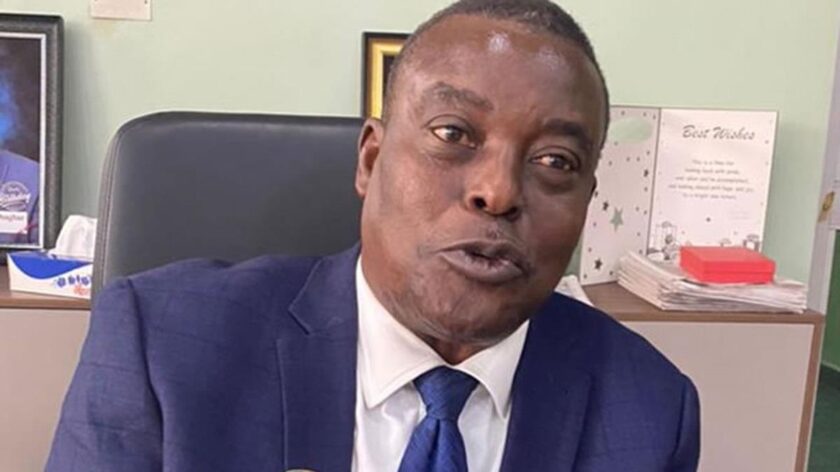
Prof. Eghosa Osaghae


The Director-General of the Nigerian Institute of International Affairs (NIIA), Prof. Eghosa Osaghae, has called for a rebalance of powers between the Federal Government and the federating units to strengthen Nigeria's federal system.


Osaghae made the call on Wednesday while delivering the maiden Annual Federalism Lecture of the Centre for Federalism and Democratic Studies at the University of Benin (UNIBEN), titled "Federalism: The Paradigm of a Turning Centre."


He said federal systems are dynamic and must continually adjust the distribution of powers between the central government and sub-national governments in response to changing political realities.


According to him, Nigeria's federalism has evolved from a region-centred structure to a highly centralised system, making the practice of federalism increasingly contested.


"The powers of the central government in every federation depend on the balance of forces. When those forces change, the powers also shift. If they do not shift, the federal system is threatened and can collapse," he said.


Osaghae explained that federal systems generally emerge through either an aggregative process, where independent states voluntarily unite to form a federation, or a disaggregative process, where a centralised state devolves powers to constituent units.


He said Nigeria belongs to the latter category, making negotiations over the sharing of powers an ongoing feature of its federal system.


According to him, before the 1966 military intervention, Nigeria operated a region-centred federal arrangement that granted the regions considerable autonomy, including maintaining overseas offices and diplomatic representations.


He said the military later transformed the structure into a nation-centred federation by concentrating greater powers at the centre.


The former Vice-Chancellor of Igbinedion University, Okada, urged advocates of "true federalism" to focus not only on increased revenue allocation from the Federal Government but also on building productive capacities and improving internally generated revenue across states.


"A sustainable federation requires an appropriate balance of powers and responsibilities among all levels of government," he said.


Earlier, the Vice-Chancellor of UNIBEN, Prof. Edoba Omoregie (SAN), said the establishment of the Centre for Federalism and Democratic Studies underscored the university's commitment to advancing research and policy solutions to governance challenges.


He said universities should serve as centres for rigorous debate and practical solutions to national issues, adding that the annual lecture would stimulate discussions on federalism, constitutionalism, democracy, good governance and peacebuilding.


Omoregie expressed confidence that the centre would grow into one of Africa's leading think tanks on federalism and democratic studies.


Enjoyed this article? Share it with friends!