










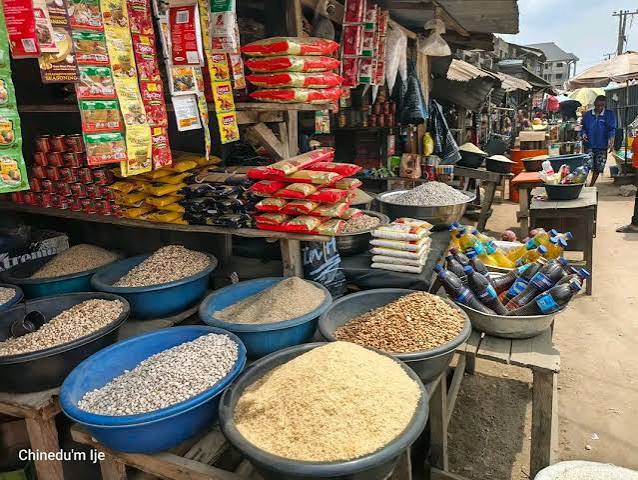
Some residents of the Federal Capital Territory (FCT) have expressed concern over the rising cost of food items, as they are finding it difficult to afford basic foodstuff.
The residents, who spoke with the News Agency of Nigeria (NAN) on Sunday in Abuja,, said they had reduced the quantity of food they usually buy due to rising prices.
NAN reports that a 50kg bag of rice formerly sold between N60,000 and N63,000 was presently being sold between N68,000 and N71,000, depending on the brand.
NAN checks revealed that a 25kg bag of rice costs between N34,500 and N36,500, depending on the brand.
A bag of beans, which was sold between N90,000 and N96,000, was now selling between N111,000 and N115,000.
Also, 25 Litre container of cooking oil that cost N56,000 was presently being sold between N62,000 and N65,000, depending on the brand.
Similarly, a 5 Litre container of cooking oil now costs N19,000, compared with its former price of N16,000.
For eggs, a small -sized crate of eggs, formerly sold at N5,500, was being sold for N6,000, while big-sized eggs now sell at N6,500.
A 50kg bag of sugar now sells between N73,500 and N75,000, compared with its former price of between N67,000 and N70,000.
A resident of Suleja, Otamiyo Yene, said the rising cost of foodstuff was becoming alarming and making it difficult for her household to maintain its usual food budget.
“I can no longer buy the same quantity of staples with my monthly budget. I now have to reduce what I buy and leave out some items,” she said.
She added that she now had to focus on only the most essential items.
Habiba Muhammad said she now spent more on essential items such as rice, beans and cooking oil, and less on other items.
According to her, she now plans her meals, compared prices before buying foodstuffs and cut unnecessary spending.
A resident of Dei-Dei, Naima Umar, said the rising cost of food items had made it difficult for her household to maintain its usual standard of feeding.
She said almost everything she normally bought had become more expensive, especially rice, beans, meat, fish, eggs and cooking oil.
“The same amount of money that I used to buy several food items now buys much less,” she said.
Umar said that the situation had affected the variety of food they consumed, as they now focused more on affordable basic items.
