






Top Headlines

Nigeria, UAE to Co-Host Investopia in Lagos, Seal Historic Trade Agreement

Published on January 14, 2026 | By Admin

Share with friends:

news


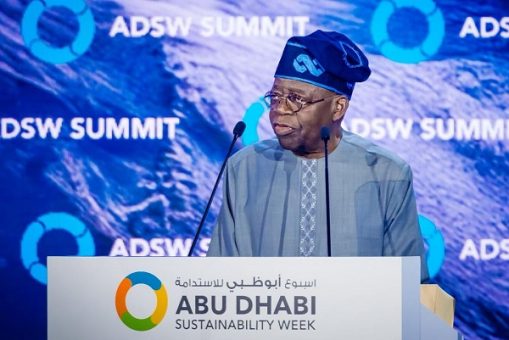
President Bola Tinubu on Tuesday announced that Nigeria will co-host Investopia with the United Arab Emirates (UAE) in Lagos in February, as part of efforts to attract global investors and boost sustainable investment inflows.


Tinubu made the announcement at the 2026 Abu Dhabi Sustainability Week (ADSW), where Nigeria also concluded a Comprehensive Economic Partnership Agreement (CEPA) with the UAE to deepen trade and economic cooperation.


The agreement was signed in Abu Dhabi in the presence of President Tinubu; President of the UAE, Sheikh Mohamed bin Zayed Al Nahyan; Nigeria’s Minister of Industry, Trade and Investment, Dr Jumoke Oduwole; and the UAE Minister of Foreign Trade, Dr Thani bin Ahmed Al Zeyoudi.


President Tinubu described the CEPA as “a historic and strategic agreement” that will strengthen cooperation in renewable energy, infrastructure, aviation, logistics, agriculture, digital trade and climate-smart development.


According to him, the Lagos-hosted Investopia will bring together investors, innovators, policymakers and business leaders to unlock new opportunities.


“Investopia will transform opportunities into commitment and ideas into investment,” Tinubu said.

“We warmly invite our partners to join us and help build the next chapter of sustainable and shared prosperity for Nigeria, Africa and the world.”


The president said Nigeria aims to mobilise up to 30 billion dollars annually in climate and green industrial finance as it accelerates energy transition reforms and expands electricity access nationwide.


“The foundation of every modern economy is electricity,” Tinubu said.

“As an emerging economy in the Global South, we understand the delicate balance between industrialisation and decarbonisation, ensuring neither is pursued at the expense of the other.”


He called for reforms in the global financial system, urging a shift away from strict sovereign guarantee requirements.


“We are calling for a fundamental shift in the global financial architecture,” he said.

“The focus should be on blended finance and first-loss capital mechanisms that allow private sustainable capital to flow directly into green projects.”


Tinubu said Nigeria has strengthened its climate governance framework through the adoption of a National Carbon Market Activation Policy and the launch of a National Carbon Registry to improve transparency and investor confidence.


He identified the Electricity Act 2023 as a key pillar of Nigeria’s energy reforms, noting that it enables decentralised power generation and distribution, particularly to underserved communities.


The president added that Nigeria’s climate investment drive includes a 500-million-dollar distributed renewable energy fund backed by the Nigeria Sovereign Investment Authority and a 750-million-dollar World Bank programme expected to expand clean electricity access to more than 17.5 million people.


Tinubu reaffirmed Nigeria’s commitment to achieving net-zero emissions by 2060 under its Energy Transition Plan, while pursuing industrial growth and universal energy access.


He invited foreign investors to partner with Nigeria in the lithium and critical minerals sector, stressing government’s priority on local processing and value addition.


Highlighting the impact of ongoing economic reforms, Tinubu said non-oil exports had grown by 21 per cent.


“These reforms are delivering results,” he said.

“Non-oil exports have grown by 21 per cent, capital importation has risen, and Nigeria now has over 50 billion dollars in investment commitments across key sectors.”


The president said Nigeria is ready to work with partners across the world to ensure sustainable, inclusive and enduring development.


Enjoyed this article? Share it with friends!