








Top Headlines

Allahu Akbar: A Call for Justice and Accountability in Northern Nigeria, By Dr. Manir Hussaini

Published on October 5, 2026 | By Admin

Share with friends:

news
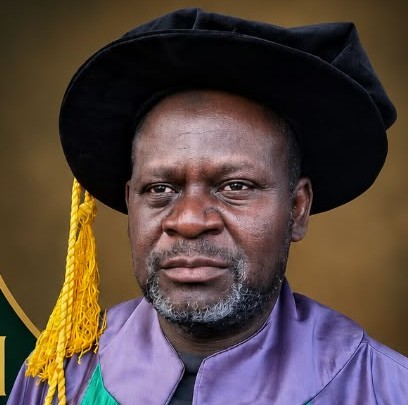
Dr. Manir Hussaini


“Allahu Akbar” — Allah is the Greatest — is one of the most profound declarations in Islam. It is more than a verbal expression; it is a declaration of faith that affirms Allah’s absolute greatness, authority and sovereignty over all creation.


When a believer proclaims “Allahu Akbar”, he or she acknowledges that Allah is greater than wealth, political power, ethnic identity, social status, personal ambition and every form of worldly influence. It places human authority in its proper perspective and reminds humanity of its ultimate accountability before the Creator.


In its truest sense, therefore, the phrase is both spiritual and moral. It is repeatedly invoked in Islamic worship, but its meaning extends into everyday life. It calls believers to humility, justice, honesty and responsibility. No individual or institution is above accountability, and no exercise of power should be beyond moral scrutiny.


Islamic teachings place justice at the heart of faith. Leadership is a trust, not a licence for personal enrichment or domination. Those entrusted with authority are responsible for the welfare of those they lead and will ultimately be questioned about how they discharged that responsibility.


In this regard, “Allahu Akbar” is also a reminder of the principles that should guide public leadership. Authority must be exercised with fairness, transparency, integrity and a genuine commitment to the welfare of the people.


Yet, in contemporary society, there are troubling instances in which religious language and symbolism are invoked alongside practices that contradict the very principles of justice, accountability and service that Islam upholds.


Public resources meant for development may be mismanaged or diverted, while communities continue to struggle with poverty, unemployment, insecurity and inadequate social services. At times, after prolonged neglect, symbolic gestures such as distributing small amounts of money or food are presented alongside religious expressions in ways that may create an impression of piety and concern.


Charity is undoubtedly a noble act in Islam. But charity cannot replace good governance, nor should it be used to justify systemic neglect or silence legitimate questions about accountability.


A society that truly understands the meaning of “Allahu Akbar” cannot tolerate corruption, injustice or the abuse of public office.


If Allah is truly the Greatest, no leader should exploit public power for personal gain.


If Allah is truly the Greatest, governance must be guided by integrity, justice and responsibility.


And if Allah is truly the Greatest, citizens must remain vigilant against manipulation, corruption and injustice in all their forms.


Northern Nigeria, like other parts of the country, is endowed with enormous human and natural resources. Its population, agricultural potential and cultural richness provide a strong foundation for development. Yet many communities continue to face serious challenges that require urgent and sustained attention.


These challenges cannot be overcome through rhetoric or symbolic gestures alone. They require visionary leadership, strong institutions, investment in education, economic opportunities, effective security, social services and transparent governance.


They also require citizens who are informed, engaged and prepared to hold leaders accountable, regardless of political, ethnic or religious affiliation.


It is important to emphasise that the problems facing Northern Nigeria are not rooted in religion or ethnicity. They are fundamentally questions of governance, leadership and institutional capacity. Muslims, Christians and people of all backgrounds are affected by corruption, insecurity, poverty and underdevelopment.


The pursuit of justice and progress must therefore be a collective responsibility that transcends division.


The true spirit of “Allahu Akbar” calls individuals and societies to rise above selfish interests and embrace higher moral values. It reminds leaders that power is temporary and that every position of authority carries a responsibility that will ultimately be accounted for before Allah.


It also reminds citizens that silence in the face of injustice can allow oppression to persist.


If Northern Nigeria is to realise its full potential, it must return to the foundational principles of justice, accountability and service to humanity. Leadership should be measured not by slogans, appearances or religious symbolism, but by integrity, performance and the welfare of the people.


“Allah is the Greatest” should never be reduced to a political slogan or an instrument of manipulation. It is a sacred declaration that calls for humility before Allah, commitment to justice and responsibility towards society.


When genuinely understood and translated into action, “Allahu Akbar” can become not merely a declaration of faith, but a powerful foundation for moral renewal, responsible leadership, good governance and lasting progress.


Dr. Hussaini is a lecturer in the Department of Educational Foundation, Federal University Birnin Kebbi. He can be reached at hussainimanir@gmail.com


Enjoyed this article? Share it with friends!