










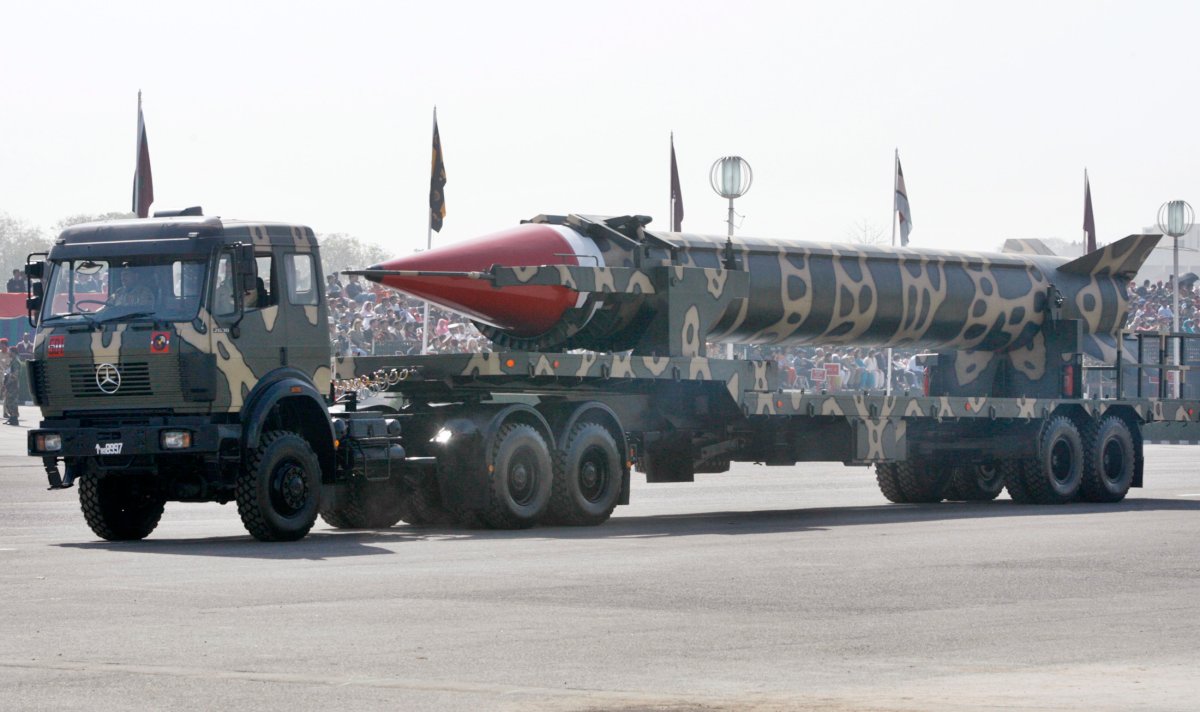
The United States has raised fresh concerns over Pakistan’s advancing missile programme, warning that it could eventually pose a threat to the US homeland, even as analysts and Pakistani officials dismiss the claim as speculative.
Director of National Intelligence, Tulsi Gabbard, made the assertion on Wednesday while presenting the 2026 Annual Threat Assessment before the Senate Intelligence Committee.
Gabbard said Pakistan, alongside Russia, China, North Korea and Iran, is “researching and developing an array of novel, advanced or traditional missile delivery systems… that put our homeland within range.”
She added that “Pakistan’s long-range ballistic missile development potentially could include ICBMs with the range capable of striking the homeland.”
According to the report, Pakistan is developing increasingly sophisticated missile technology that could eventually extend beyond South Asia and challenge US missile defences.
The assessment also warned that global missile threats to the US could grow significantly, projecting an increase from about 3,000 missiles today to at least 16,000 by 2035.
However, experts have pushed back against the claims, arguing that Pakistan currently lacks the capability to strike the United States.
Analysts note that Pakistan’s longest-range operational missile, the Shaheen-III, has a range of about 2,750 kilometres, far below the 5,500 kilometres minimum typically required for intercontinental ballistic missiles (ICBMs).
They also point out that the distance between Pakistan and the US exceeds 11,000 kilometres, making such a strike currently unfeasible.
