










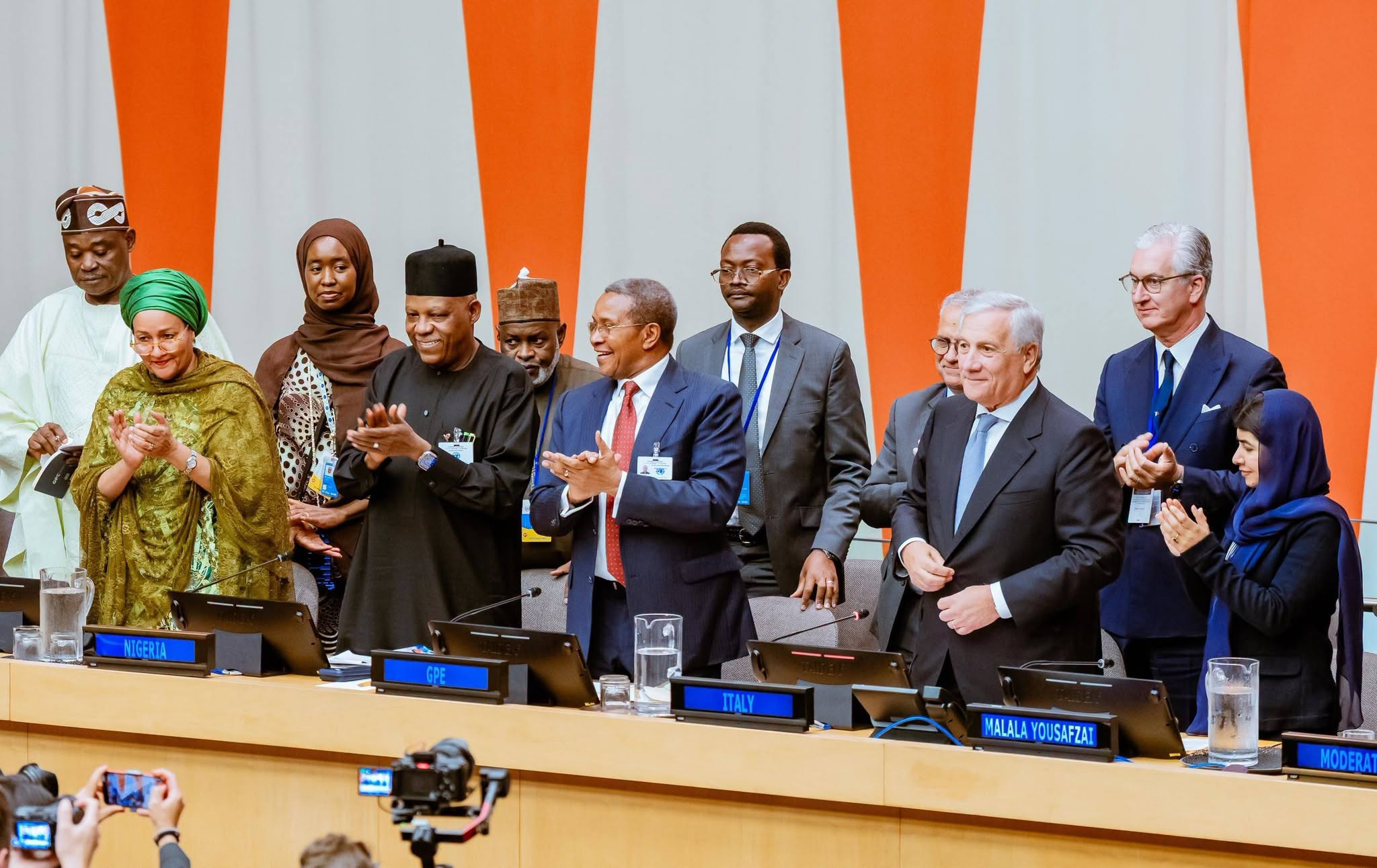
Health leaders, development partners and diagnostics experts have called for country-led adoption of Artificial Intelligence (AI) and other technologies to accelerate malaria elimination and maximise available health resources.
The call was made during a high-level event, “Smarter Investment, Greater Impact: Harnessing AI to Accelerate Disease Elimination”, held on the margins of the 81st session of the United Nations General Assembly (UNGA81) in New York.
The News Agency of Nigeria (NAN) which monitored the event via webinar reports that the event was co-hosted by the Global Institute for Disease Elimination (GLIDE), and the RBM Partnership to End Malaria and Nigeria.
Participants examined how AI could support more efficient health investments amid shrinking donor budgets and sustained pressure on development and humanitarian financing.
They also considered how AI could strengthen disease surveillance, improve decision-making and enable more targeted deployment of interventions against preventable diseases, including malaria, polio and neglected tropical diseases.
Delivering the keynote remarks, the Coordinating Minister of Health and Social Welfare, Prof. Muhammad Ali Pate, said countries should determine how emerging technologies were adopted within their health systems.
Pate, who was represented by Dr Michael Adekunle Charles, Chief Executive Officer of the RBM Partnership to End Malaria, said malaria-endemic countries understood the context and lived realities of communities affected by the disease.
The minister said such countries should therefore remain at the centre of decisions on technology adoption and disease elimination.
“Malaria-endemic countries must be in the driving seat, whether determining how artificial intelligence and new technologies are applied or strengthening manufacturing and resilient supply chains,” he said.
He said the RBM Partnership’s “Big Push against Malaria” brought partners together around country priorities and connected countries with expertise, partners, data and resources needed to act.
Nigeria accounts for the largest share of the global malaria burden and is implementing the Health Sector Renewal Investment Initiative to strengthen primary healthcare and domestic financing.
He said the collaboration between RBM and GLIDE would help translate shared knowledge and innovation into practical, country-led action.
Earlier, Dr Farida Hosani, the Chief Executive Officer of GLIDE, said progress toward malaria elimination depended on translating global knowledge and innovation into practical capabilities at country level.
