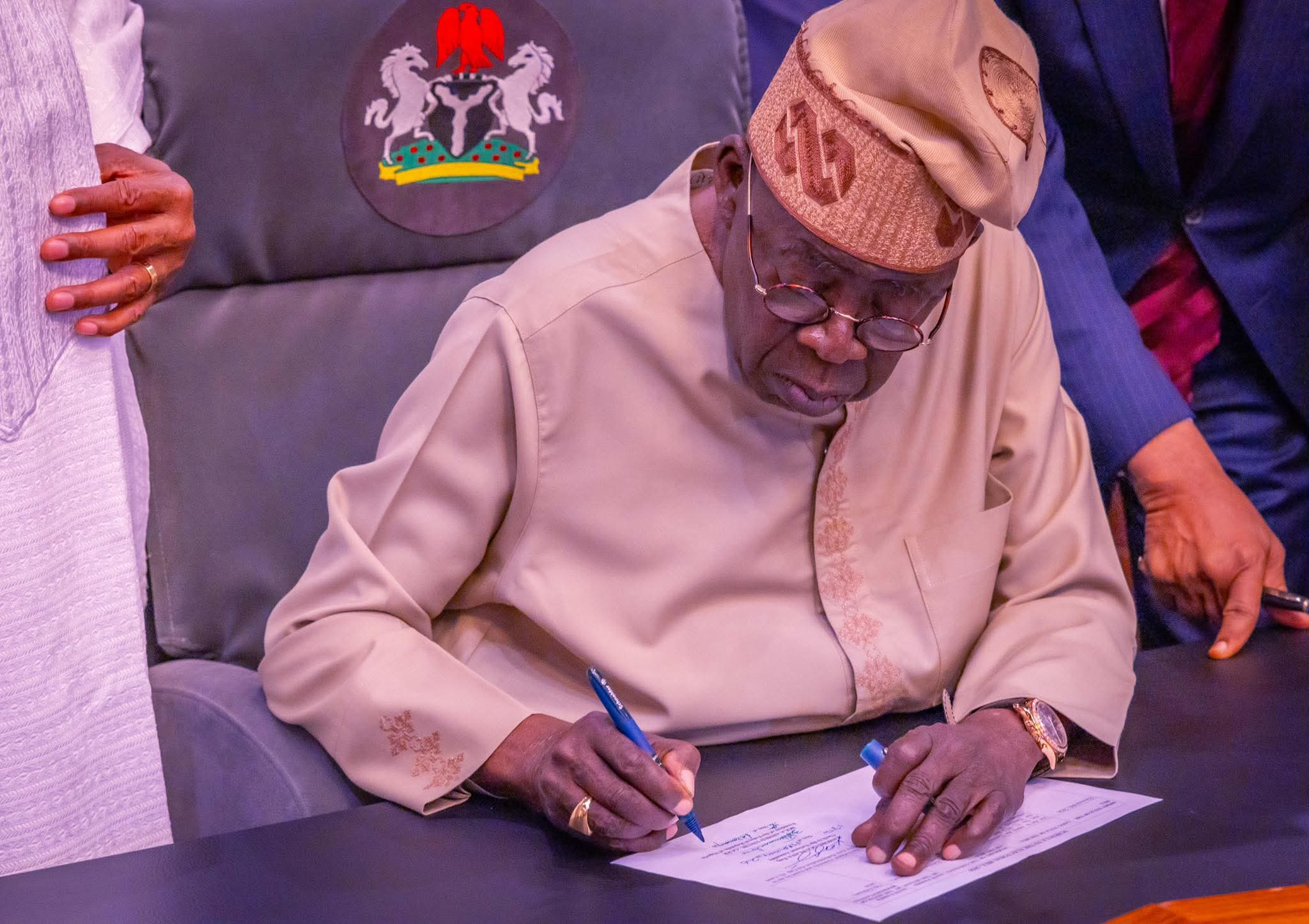
President Bola Ahmed Tinubu has signed into law the 2026 Appropriation Bill valued at ₦68.32 trillion, setting the tone for the Federal Government’s fiscal operations for the year.
The signing was announced on Friday in Abuja through a statement issued by the President’s Special Adviser on Information and Strategy, Bayo Onanuga.
The 2026 budget provides ₦4.799 trillion for statutory transfers, ₦15.8 trillion for debt servicing, and ₦15.4 trillion for recurrent expenditure, while ₦32.2 trillion is allocated to capital projects under the Development Fund.
Tinubu said the budget, with about 50 per cent devoted to capital expenditure, reflects his administration’s commitment to economic stability, infrastructure development, national security, and inclusive growth.
“The allocations reflect a strategic balance between statutory obligations, debt servicing, recurrent expenditure, and capital investments critical to driving productivity and improving the quality of life for Nigerians,” he said.
In addition, the president signed an amendment to extend the implementation of the capital component of the 2025 Appropriation Act from March 31 to June 30, 2026.
He explained that the extension would ensure full utilisation of funds, especially for ongoing infrastructure and development projects nearing completion across the country.
“The extension will enable Ministries, Departments, and Agencies to consolidate ongoing works, enhance project completion rates, and maximise value for public expenditure,” Tinubu stated.
He directed Ministries, Departments, and Agencies (MDAs) to ensure disciplined, transparent, and efficient use of allocated resources, with emphasis on value for money and timely project delivery.
Tinubu also commended the National Assembly for its cooperation and diligence in the swift passage of the budget, stressing the importance of sustained collaboration between the executive and legislative arms of government.
He reaffirmed his administration’s commitment to deepening fiscal reforms, improving revenue generation, and prioritising investments that will stimulate economic growth, create jobs, and strengthen social protection for Nigerians.