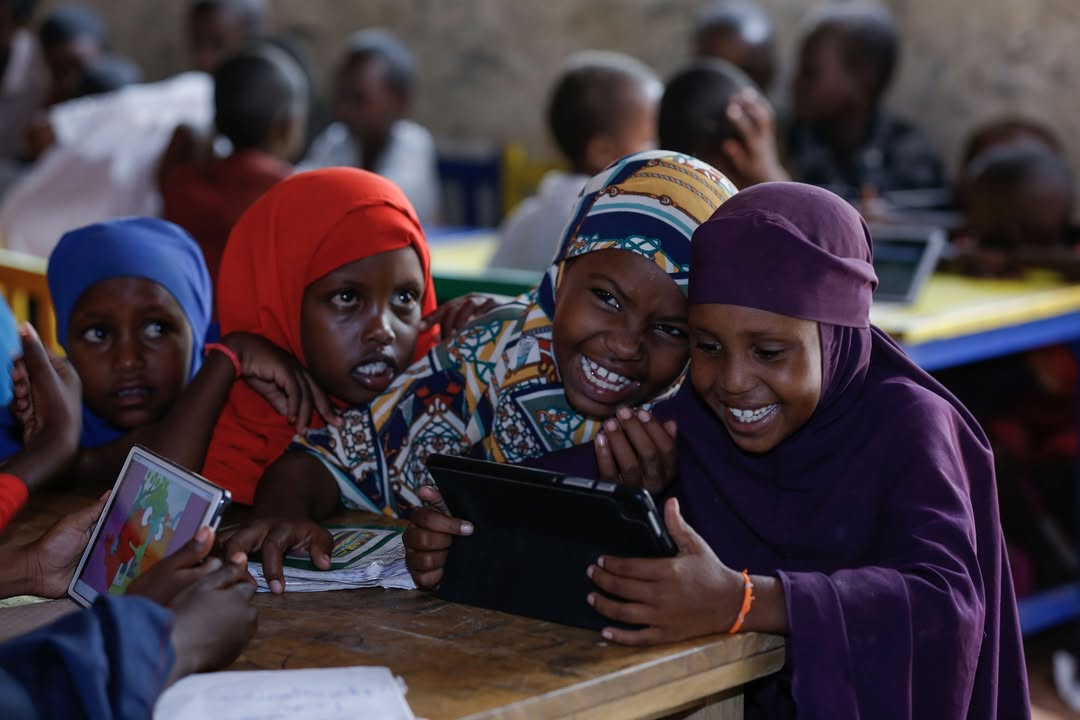
The Executive Chairman, Sokoto State Universal Basic Education Board (SUBEB), Alh Umar Tambuwal, says the state government has intensified efforts to address the rising number of out-of-school children through expanded Early Childhood Care and Education (ECCE) and strategic reforms.
Tambuwal made this known on Tuesday in Sokoto at a media dialogue on educational reform and out-of-school children of Sokoto, Kebbi and Zamfara States.
He described education as central to the future of the state, stressing that investment in early childhood development remained critical to reversing poor educational outcomes.
"Science has shown that the trajectory of a human life is often determined before a child even enters primary school.
"The period from birth to age eight is crucial for brain development, cognitive growth and emotional stability," he said.
According to him, quality ECCE is not a luxury but a necessity, particularly for children from disadvantaged backgrounds.
He noted that failure to provide early learning opportunities fuels the crisis of school dropouts and out-of-school children.
Tambuwal said that with the support of the United Nations Children's Fund (UNICEF), the board supported 160 ECCE centres in 2024 and 2025 with teaching materials and caregiver training.
He added that UNICEF had committed to supporting an additional 80 centres, while SUBEB would triple the number of centres in 2026.
The chairman, however, acknowledged the enormity of the challenge, disclosing that 66.4 per cent of school-aged children in the state were currently out of school.
He said the figure represented hundreds of thousands of vulnerable children, including girls, orphans and Almajiri pupils, at risk of being trapped in poverty.
Tambuwal said that under the leadership of Gov. Ahmad Aliyu, the state government had moved from documenting the crisis to implementing targeted interventions.
He said that through a comprehensive mapping exercise across the 23 Local Government Areas, about 25 per cent of the affected children had been identified and documented for reintegration.
"We are finding them in the streets, rural communities and Tsangaya centres to ensure they are enrolled in formal or integrated schools," he said.
Tambuwal said the state government had declared basic education free and compulsory, abolished school levies and prioritised the recruitment of qualified teachers.
He added that the Digital Village Initiative, launched in May 2025, was equipping Almajiri children and out-of-school girls with digital skills.
He further disclosed that the AGILE Project was providing infrastructure grants to 240 secondary schools to improve learning environments and retention.
On Almajiri reform, Tambuwal said the government, in collaboration with the Sultanate Council, had profiled and registered more than 249,000 vulnerable children.
He said integrated schools had been established in Shuni, Gagi, Tambuwal and Wamakko, combining Qur'anic education with literacy, numeracy and vocational training, alongside free accommodation and feeding.
Tambuwal said the state had also adopted technology-driven monitoring systems, including Kobo Collect and GPS tools, to ensure accurate and actionable data.
He disclosed that the government had commenced the establishment of three mega model schools across the three senatorial zones to reduce enrolment density and enhance access to quality instruction.
"The schools are Aliyu Magatakarda Model Primary School in Wamakko (Sokoto Central), Muhammad Sambo Model Primary School in Goronyo (Sokoto East), and Government Day Junior Secondary School in Tambuwal (Sokoto South),l.
"Each of the schools sits on about 35,700 square metres, with 60 classrooms, science laboratories and playgrounds," he said.
Tambuwal said a specialised committee had screened 3,000 teachers to ensure only qualified personnel were deployed to the new schools.
He said this was also to ensure qualified deployment to SMART Schools, Second Chance Centres for girls and vocational centres in Sifawa, Wurno and Wamakko.
He said the state's Out-of-School Children (OOSC) dashboard had captured 326,119 children between 2024 and 2025, describing it as a significant step towards data-driven planning.
Tambuwal called on the Federal Government and the Universal Basic Education Commission to replicate the state's model nationwide through technical support and funding.
"Educating every child is not just a development goal; it is a moral imperative and a cornerstone of national security," he said.
He urged the media to amplify the resolutions from the high-level dialogue, including proposed legislation to regulate the Almajiri system and the revival of home-grown school feeding programmes.
In his remarks, the Chief of Field Office, Sokoto Field Office, UNICEF, Dr Michael Juma, underscored the role of the media in promoting child education.
Juma commended the Sokoto State Government for creating an enabling environment for educational development.
He said the media remained critical in shaping public perception, informing parents and encouraging enrolment in early childhood care and education.
"Early childhood education contributes to greater achievement in later years. We want to see a digitally empowered generation of learners," he said.
Juma called on development partners to continue supporting the state government's efforts to ensure that every child in Sokoto was enrolled and retained in school.
He urged journalists to promote positive narratives that would drive increased demand for enrolment across communities.
Also speaking, the First Lady of Sokoto State, Hajiya Fatima Aliyu, represented by the Commissioner for Basic and Secondary Education, Prof. Ala Ahmed, reaffirmed her commitment to championing policies and programmes that promote inclusive and equitable access to quality education, particularly for the girl-child and other vulnerable groups.
She said the Office of the First Lady would continue to support initiatives aimed at reducing the number of out-of-school children through advocacy, community engagement and strategic partnerships with development agencies.
Hajiya Aliyu commended SUBEB and UNICEF for their sustained collaboration with the state government, noting that collective action remained key to achieving lasting reforms.
The first lady urged parents, traditional leaders and other stakeholders to take ownership of the enrolment drive, saying," Education is a shared responsibility essential to the socio-economic transformation of Sokoto State."
The two-day workshop was organised by the Sokoto State SUBEB in partnership with UNICEF and funded by European Union (EU).
The participants comprised staff of SUBEB, Non-Governmental Organisations (NGOs), Civil Society Organisations (CSOs), government officials and media personnel drawn from Kebbi, Sokoto and Zamfara states.