









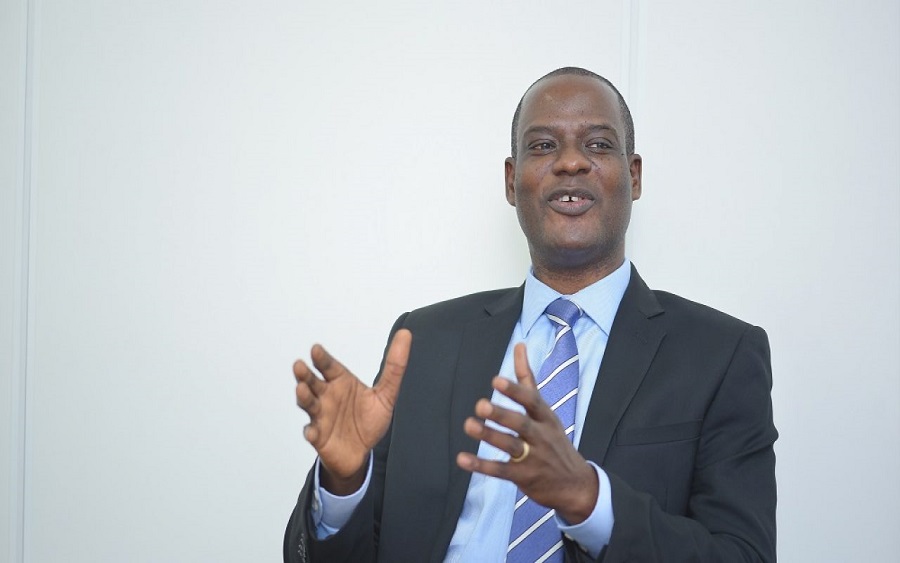
The Senate has confirmed Taiwo Oyedele as Nigeria’s Minister of State for Finance, following his screening at the National Assembly on Wednesday.
During the screening, Oyedele outlined key strategies aimed at stabilising government revenue and protecting Nigerians from fluctuations in global oil prices.
Speaking on the impact of rising fuel prices and transportation costs caused by volatility in the international crude oil market, he suggested the use of forward crude oil sales to stabilise revenue and fuel pricing.
According to him, selling part of Nigeria’s crude oil in advance at agreed prices could help guarantee government budget financing while reducing the impact of sudden changes in global oil prices.
“One strategy used in several countries is selling crude forward. Nigeria can lock in a price for a portion of our crude for a specified period. That would guarantee budget financing and also give Nigerians stability so prices are not fluctuating the way we have seen in recent days,” he said.
Oyedele also addressed the issue of unpaid government contractors caused by revenue shortfalls, advocating that contracts should only be awarded based on available funds.
He warned that delayed payments create what he described as a “trust deficit premium,” which forces contractors to inflate project costs to hedge against possible delays in payment.
He explained that a contract originally worth N1 billion could rise to N2 billion because contractors factor in potential losses resulting from delayed payments.
On revenue generation, the minister noted that Nigeria has historically depended heavily on taxation and the oil and gas sector while paying limited attention to other revenue-generating areas such as solid minerals.
“For many years as a country, we have disproportionately focused on taxation and oil and gas, and that has taken our attention away from other areas where we can generate revenue,” he said.
Oyedele identified policy uncertainty as a major obstacle hindering growth in the solid minerals sector and said government might approach the National Assembly to address the issue.
He also stressed the need for realistic budgeting and improved implementation of government projects.
“When we have budgets, we need to ensure that there is funding behind them and that there are releases so that we can execute them — 100 per cent if possible — particularly for capital expenditure,” he said.
Oyedele noted that many Nigerian budgets in recent years have been overly ambitious compared to available revenue.
“Looking at Nigeria’s budgets over the past five years, we have had many years where the budgets appeared too ambitious compared to the revenue. We were focusing on the expenditure side without paying enough attention to the revenue side,” he added.
According to him, nearly half of Nigeria’s budgets are currently financed through borrowing.
“Today, if you combine the federal and state governments, nearly half of our budgets are deficit-financed. We need to pay more attention to realistic revenue to drive our projects,” he said.
He also pledged to prioritise transparency in government financial obligations.
“If this distinguished Senate confirms me, one of the first things I will do is create a clear status quo analysis. If we owe contractors, we should know it,” he said.
Oyedele further emphasised prudent government spending to ensure that revenues saved from the removal of fuel subsidy benefit Nigerians.
“If the government gets more revenue because the subsidy has been removed, it is actually a transfer from the people to the government. The only way we can make that sacrifice worthwhile is to spend that money in areas of priority for the people,” he said.
He added that targeted investments in infrastructure, especially roads linking farms to warehouses, factories and markets, could deliver quick economic benefits to Nigerians.

