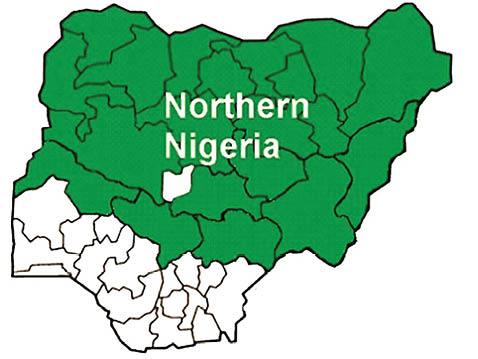
The Federal Government on Wednesday expressed determination to fast-track socio-economic development in the Northern states through the Industrial Revolution, using regional development commissions.
Dr Mary Ogbe, the Permanent Secretary, Ministry of Regional Development, made this known while declining a Regional Technical Validation Workshop on “National Regional Development Policy (NRDP) 2026-2030” open in Maiduguri.
Ogbe stated that the country was not lacking sound policies but implementation was the major problem, adding that the ministry was looking back at how it was in the country in those days when the North was booming economically during the regional government.
“You know, it was during the Regional government that Nigeria got whatever prosperity and development they brought, and this President (President Bola Tinubu) saw that there was a need to take development to the Hinterland and try to address this issue of rural/urban migration, we’re going to tackle insecurity.
The permanent secretary insisted that the neglect of development in the Hinterland was responsible for most of the rural problems being experienced in the country today, adding that the regional development commissions were expected to address the problems through intervention.
She stated that if well addressed, people at the grassroots would begin to be part of government, and that was what the proposed policy intended to achieve.
Ogbe said that the framework for the proposed policy had been developed through extensive consultations with the United Nations Development Programme (UNDP) as the ministry’s partner both technically and financially.
“It is no longer news that the North contributes 10.3 per cent of the national GDP in the second quarter of 2024 and records a GDP per capita of 1102, which is the second lowest in all of the regions, second to North-west and in less than half the national,” the permanent secretary said.
According to her, the nation’s highest GDP is coming from the Northwest, adding that these figures are not a reflection of the North-East’s inherent capacity.
“They are a measure of what over a decade of conflict displacement and underinvestment can do to eviction. We still say that more than 2 million people are still internally displaced across the region (North-east),” Ogbe said.
She stated that critical infrastructures were lacking, livelihoods have been disrupted, the value chain has been broken and private investment has been deterred because no one wants to put their money where there is no security.
“So the password requires the policy framework that is conflict sensitive sequence deliberately and adequately resourced. The NRDP which is the national regional development policy, is that framework,” the permanent secretary said.
She, however, expressed the ministry’s readiness to ensure that all the points raised at the workshop were well captured in the operational road map for the commission in the proposed policy.
Ogbe said that the regional economic transformation pillar offered a pathway to revive the region’s agricultural economy, rebuild processing capacity, and activate cross-border trade corridors with Chad and Cameroon.
She, therefore, urged participants to bring the full weight of their experience, professional, institutional, and personal in order to bridge gaps if any in the proposed policy document.
Earlier, the Managing Director of the North-East Department Commission (NEDC), Mohammed Alkali, commended the Federal Government and the UNDP for the foresight behind the National Regional Development Policy.
“This draft Policy sets out to change that — to place our regions at the very centre of national planning, and to pursue, in its own words, balanced, inclusive and competitive development that reduces spatial inequalities and unlocks the productivity of every region.
“The Policy rightly classifies us as a region carrying the weight of fragility and post-conflict reconstruction. These are not abstract statistics to us. They are the daily realities of the communities the Commission was established to serve.
“That is precisely why this Policy matters to us. Its first pillar — Spatial Equity and Territorial Balance — speaks directly to the support that lagging, fragile and post-conflict regions like ours require,” he said.
Alkali said that the proposed policy was out to fast-track regional economic transformation, thereby creating industrial clusters and agro-processing value chains that could put the people back to work.
“It is commitments on infrastructure and connectivity, and on human development and social inclusion, that address the very gaps that hold us back. And importantly, the Policy strengthens the mandate, coordination and accountability of Regional Development Commissions such as ours, so that we may serve more effectively and in closer partnership with our State and Local Governments,” the managing director said.
Also speaking, the UNDP Resident Representative, Elsie Attafuah, expressed happiness with how the formulation process of the NRDP was conceived by the ministry
With technical assistance from UNDP was maturing and peaking at its climax.
“This document is a framework for articulating a coherent national vision for a functional, integrated, and territorially competitive development in Nigeria. It will be a guide on how Nigeria can harness the possibilities of its regions and leverage them for socio-economic development.
“Historically, Nigeria’s development had benefitted immensely from regional economic structure, regional political evolution, and regional social dynamics.
“Available evidence shows that Nigeria experienced significant development strides through a healthy, competitive and contextualised socio-economic advancement in the first republic.
“At that time, Nigeria witnessed rapid socio-economic progress powered by autonomy, resource control, economic independence and self-governing that allowed constituent regions to maximise their unique potentials and resource endowments to stimulate their prosperity.
“That period has often been referenced with nostalgia as a prime governance era in Nigeria.
Today’s convening, therefore, presents a rare opportunity to reposition Nigeria’s regions, not merely as administrative units, but as engines of productivity, innovation, industrialisation, resilience, and inclusive prosperity,” Attafuah, who was represented by Mr Mathew Alao, Senior Adviser on Governance, said.