










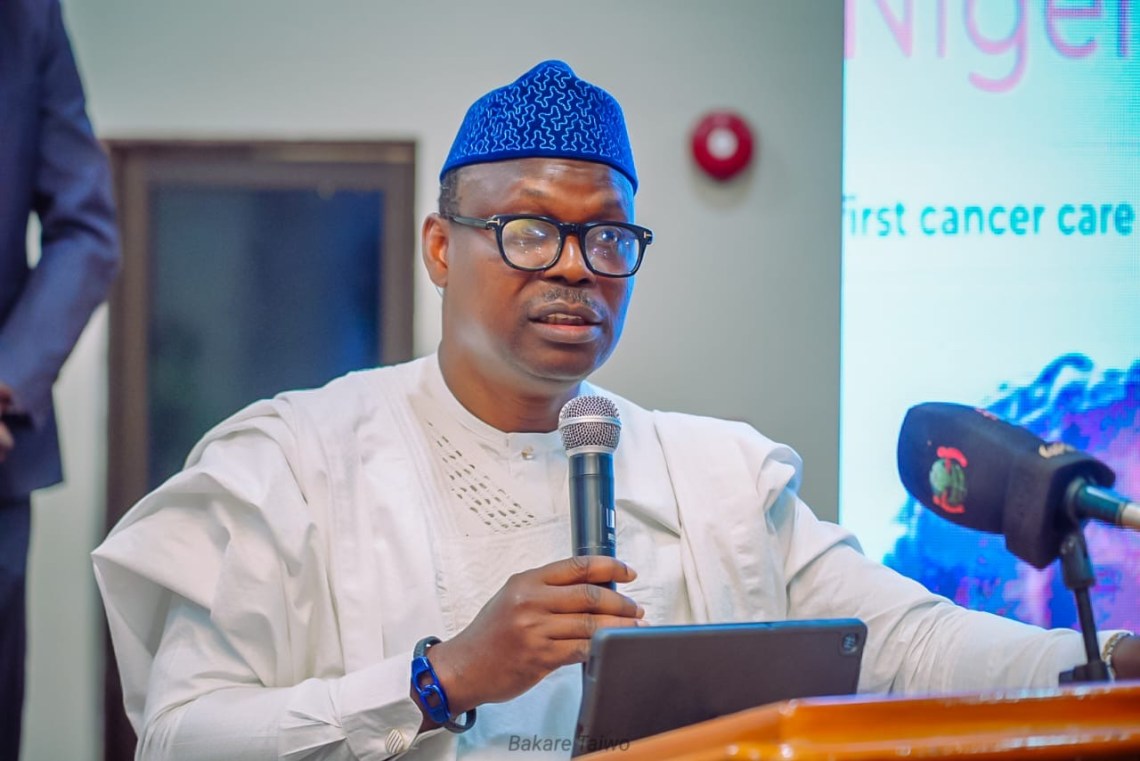
The Federal Government says it will continue to harness digitalisation, artificial intelligence, telemedicine, molecular diagnostics, precision medicine and data analytics to strengthen cancer prevention, diagnosis and treatment.
The Minister of State for Health and Social Welfare, Dr Iziaq Salako, said this on Tuesday in Abuja at the opening of the 2026 International Cancer Week.
The week has the theme: “United Against Cancer: Building Resilient, Innovative and Equitable Systems Across the Cancer Care Continuum.”
Salako said the government was also strengthening cancer registries and using data analytics to improve cancer control, while ensuring that emerging technologies addressed gaps in access to specialist services and clinical decision-making.
“The first priority under this year’s theme is resilience- building cancer-care systems that can withstand shocks, adapt and sustain essential services.
“This requires investment in infrastructure, equipment, diagnostics, medicines, human resources and sustainable financing.”
He, however, said innovations being introduced into cancer care must be affordable, appropriate, scalable and sustainable to deliver meaningful outcomes within Nigeria’s health system.
The minister said the technologies were expected to help overcome geographical barriers, expand access to specialist care, strengthen referrals and support clinical decision-making.
He also stressed the need to strengthen locally relevant cancer research and ensure that evidence translated into effective policies, programmes and better patient outcomes.
Salako said the Federal Government was pursuing the innovations alongside investments in cancer infrastructure, diagnostics, medicines, human resources and sustainable financing.
According to him, the introduction of immunohistochemistry services under the Nigeria Cancer Access Partnership Programme, supported by Roche, is another intervention aimed at improving cancer diagnosis.
Salako said the government was also expanding prevention and early detection through eight National Institute for Cancer Research and Treatment (NICRAT) Preventive Oncology Clinics across the six geopolitical zones.
The minister said the Federal Government was committed to ensuring that cancer care was accessible regardless of income, location or social circumstance.
He said the National Cancer Health Fund and Catastrophic Health Expenditure Fund were strengthening financial protection for cancer patients and families.
The Director-General of NICRAT, Prof. Usman Aliyu, said the institute had strengthened Nigeria’s cancer-control efforts through research, workforce development, surveillance and improved access to care.
Aliyu said nearly 2,000 healthcare professionals had been trained across the six geopolitical zones in cancer prevention, diagnosis, treatment, palliative care, research and programme implementation.
