










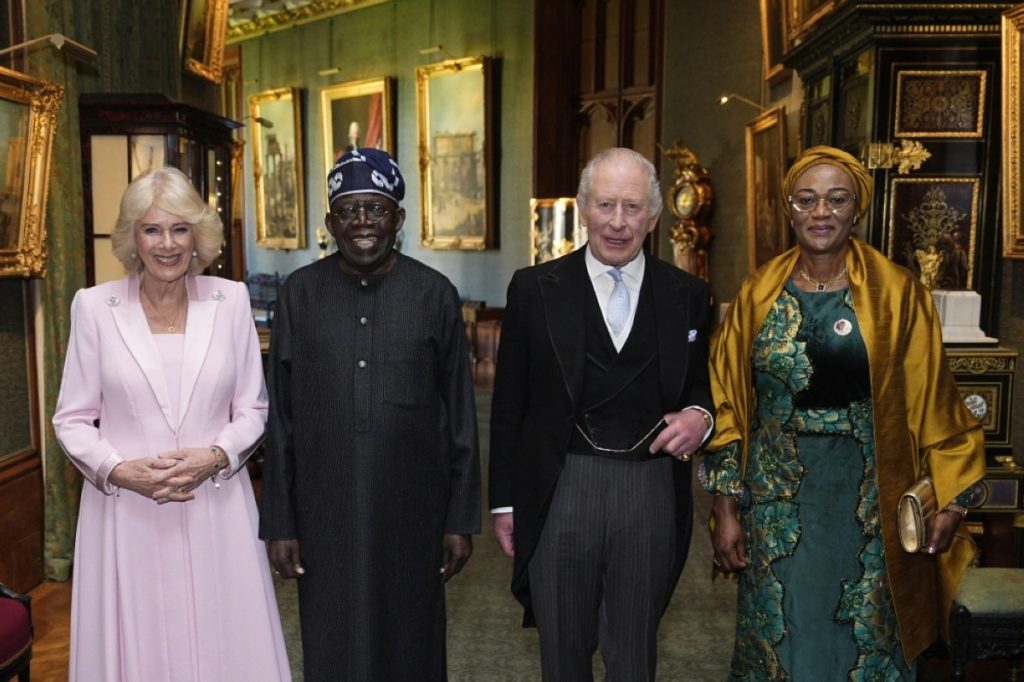
President Bola Tinubu has reaffirmed Nigeria’s commitment to strengthening bilateral relations with the United Kingdom, with emphasis on security cooperation, economic growth, and shared democratic values between both nations.
Tinubu stated this on Wednesday night at a State Banquet hosted in his honour by King Charles III at Windsor Castle, as part of his ongoing state visit.
The president described the engagement as a historic moment, noting that it reaffirmed enduring ties rooted in shared history, mutual respect, and a collective vision for progress and global stability.
“It is a profound honour to stand before you today, representing the people of Nigeria as we reaffirm the enduring bonds of friendship, history, and shared purpose.”
He noted that Nigeria and the UK share common democratic ideals, adding that both countries must continue to work together to advance peace, prosperity, and institutional development.
Tinubu highlighted the importance of the rule of law, tracing its roots to foundational legal traditions such as the Magna Carta, which continue to influence modern democratic governance globally.
He said Nigeria’s legal and institutional frameworks have drawn significantly from British traditions, including parliamentary practices, civil service structures, and judicial systems adapted to national realities.
The president emphasised that beyond institutions, people-to-people connections remain the strongest link between both countries, citing the contributions of Nigerians in the United Kingdom across critical sectors.
According to him, Nigerians in the UK have continued to make remarkable impact in healthcare, business, academia, sports, and public service, strengthening bilateral relations through human capital and cultural exchange.
He stressed that Nigeria remains committed to playing a leading role within the Commonwealth, leveraging the platform to advance cooperation, trade, and collective development among member states.
Tinubu also underscored the importance of enhanced security collaboration, noting that Nigeria faces complex terrorism challenges in the West African sub-region, particularly linked to instability in the Sahel.
