









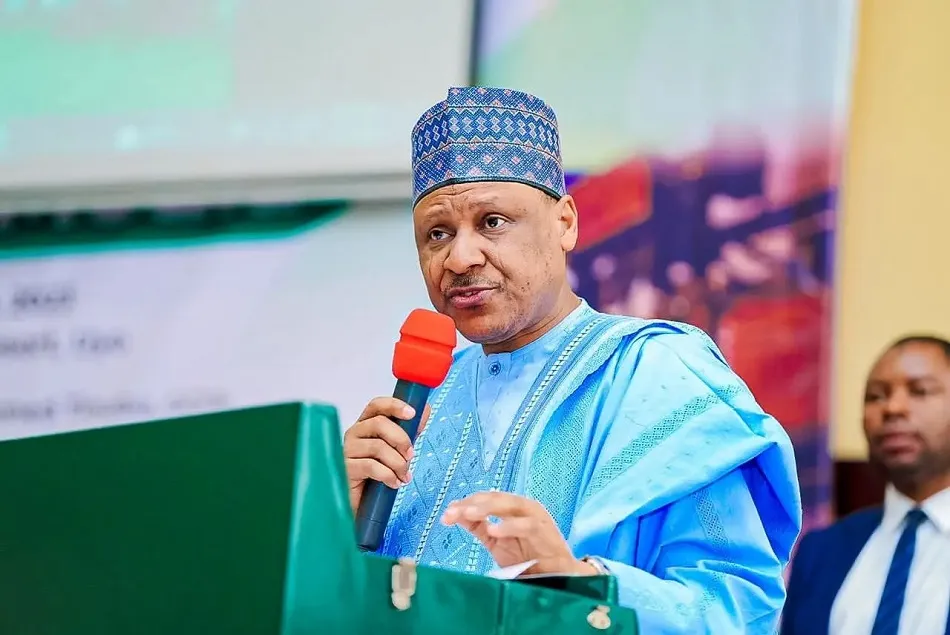
The Minister of Information and National Orientation, Mohammed Idris, has dismissed claims that Nigeria is on the verge of collapse, insisting that the country remains stable and resilient.
Idris made the remarks on Wednesday during the 81st General Assembly and 23rd Annual General Meeting of the Broadcasting Organisations of Nigeria, where he described recent concerns raised by civil society groups as unfounded.
“I want to unequivocally refute the insinuation that Nigeria is on the brink. On the contrary, we are daily exhibiting resilience and tackling our security and economic challenges more decisively,” he said.
The minister’s comments followed criticisms by over 50 civil society organisations, which accused the administration of Bola Ahmed Tinubu of failing Nigerians amid rising insecurity, poverty, and governance challenges.
Responding, Idris said ongoing military operations across the country were yielding positive results, citing interventions in Zamfara and Niger states where security forces reportedly neutralised bandits and foiled attacks.
“Coordinated operations by the Armed Forces and other security agencies have led to sustained gains in several parts of the country,” he said.
“Incidents of large-scale insurgent control have significantly decreased, and we are strengthening intelligence and rapid response systems to protect lives and property.”
On the economy, the minister said Nigeria was showing signs of recovery, pointing to improving macroeconomic indicators, rising foreign reserves, and renewed investor confidence.
“These decisions, though difficult, are stabilising public finances and creating a more transparent economic environment,” he said.
He also cited Nigeria’s recent reclassification to Frontier Market status by FTSE Russell as evidence of renewed global confidence in the country’s economy.
“This development confirms that Nigeria is once again a viable destination for global investment,” Idris added.
The minister further urged media organisations to uphold professionalism and avoid content capable of inciting tension, especially as the country approaches another election cycle.
“The airwaves are a public trust. Broadcasting must continue to inform, educate, and unite our people, while upholding the highest standards of professionalism, fairness, and accuracy,” he said.
Idris also called for stronger collaboration between the government and the media to combat misinformation and promote national unity.
“Difficult moments like this require stronger faith in our country and a deep sense of patriotism, not narratives that create fear or division,” he said.

