










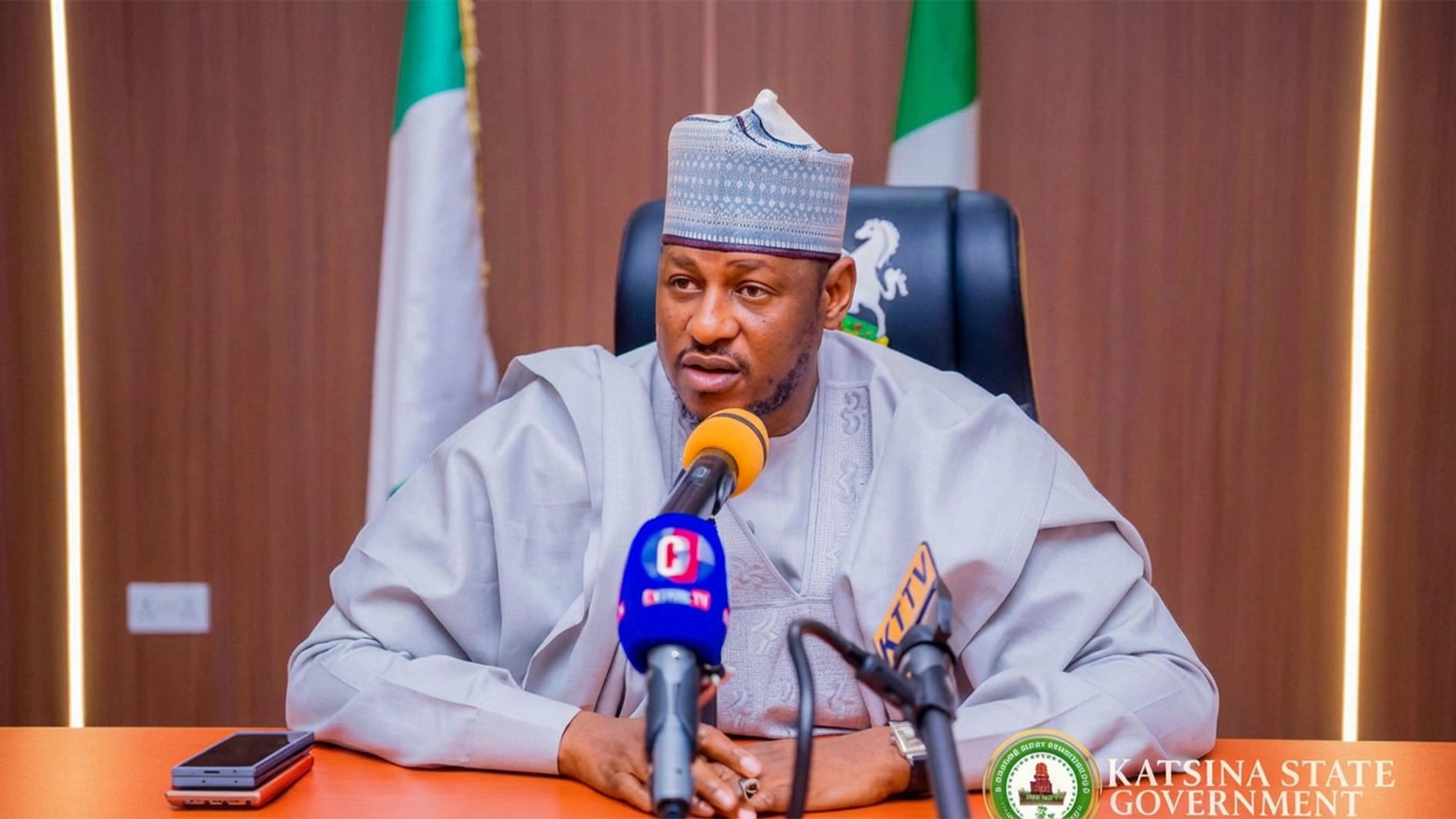
Gov. Dikko Radda of Katsina State on Wednesday launched the distribution of 90,000 bags of assorted grains to vulnerable households across the 34 Local Government Areas of the state.
The governor performed the flag-off at a ceremony in Kaita local government area, saying the intervention was part of his administration’s efforts to cushion the impact of economic hardship and strengthen food security.
Radda said the intervention reflected his administration’s commitment to ensuring that government programmes reached people at the grassroots.
“Our philosophy has remained clear: development must reach the grassroots, and the people must feel the presence and impact of government in their communities and daily lives,” he said.
He said the latest distribution was part of a broader programme of support for vulnerable households, recalling that the government had earlier supported women engaged in akara and pap businesses across the 361 wards with food items and financial assistance during Ramadan.
According to him, the government also supported 7,220 widows across the state, with 20 beneficiaries selected from each ward and provided with 25kg bags of rice and N10,000 cash assistance.
Radda acknowledged the contribution of the Aliko Dangote Foundation to the state’s food support efforts, particularly through the distribution of rice to vulnerable citizens across communities.
He said the state had previously distributed another 90,000 bags of grains comprising 30,000 bags each of millet, maize, and guinea corn.
The governor said lessons from the previous exercise had enabled the government to improve its grassroots distribution mechanism, particularly through the Community Level Committees (CLCs).
“The objective is not simply to distribute more, but to distribute better, to improve targeting, strengthen accountability, and ensure that government support reaches those for whom it is intended,” he said.
Radda, however, said food palliatives alone could not provide a lasting solution to food insecurity, stressing that the government was pursuing a two-pronged approach of providing immediate relief while strengthening the productive capacity of communities.
He said the approach included investments in agriculture, irrigation, community development, youth empowerment, and women’s economic participation.
The governor said the government had supported farmers with subsidised fertiliser and other agricultural inputs, while expanding irrigation through solar and petrol-powered pumps, tube wells, and other farm inputs.
“These investments are deliberately designed to strengthen food production because the most sustainable response to food insecurity is to empower our farmers to produce more food, reduce the cost of production, create rural employment, and improve household incomes,” he said.
