










OPINION
Road construction is one of the most visible measures of government performance. But in rural communities, a road means much more than asphalt, drainage and engineering works. It can determine how quickly farmers transport produce to markets, how easily patients reach hospitals and whether communities can participate meaningfully in the wider economy.
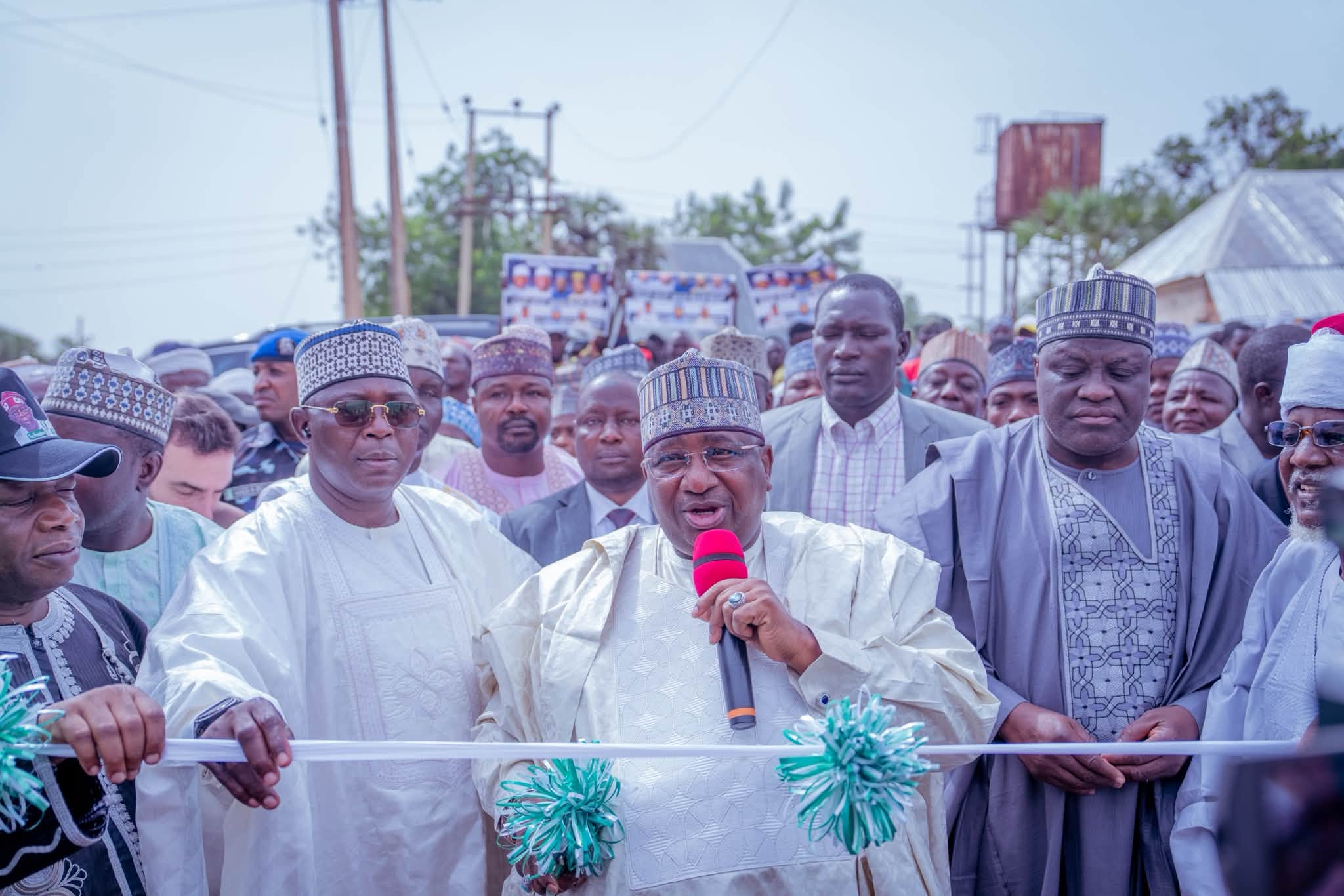
This is why the approval and flag-off of rural road projects across Kebbi State by Governor Nasir Idris deserve attention. The projects cover routes linking Kalgo to Diggi, Tungar Lafiya, Maidahini and other communities in Bagudo, Zuru and surrounding areas, placing rural connectivity at the centre of Kebbi State’s development agenda.
For a state with a significant agricultural base, rural roads are not a minor infrastructure issue. They have direct implications for productivity, trade, household welfare and the cost of doing business. Extending road development beyond major urban centres is therefore a potentially important step towards more balanced development.
The projects across Kalgo, Diggi, Tungar Lafiya, Maidahini, Bagudo, Sakaba, Danko Wasagu, Fakai and Zuru offer an opportunity to demonstrate that infrastructure development can reach communities whose needs are sometimes overlooked in the competition for public investment.
For residents of these communities, development is not an abstract concept. It is the difference between spending hours negotiating difficult routes and reaching destinations with relative ease. It is the ability to transport agricultural produce with fewer losses and access essential services without unnecessary delays.
These are among the everyday concerns against which government performance should be measured.
Why Rural Roads Matter
Kebbi’s rural economy depends substantially on the movement of people, agricultural produce and commercial goods. Where roads are inadequate, transportation becomes more expensive, access to markets is restricted and the economic potential of farming communities is weakened.
A better road network can help reduce these constraints. Farmers may find it easier to move produce to buyers, traders may reach more customers, and transport operators may serve communities more reliably. Improved connectivity can also facilitate access to schools, healthcare facilities and administrative services.
However, the benefits are not automatic. Roads alone cannot resolve every challenge facing rural communities. Their impact depends on the quality of construction, effective maintenance and complementary investments in agriculture, electricity, education, healthcare, storage facilities and access to finance.
For Governor Nasir Idris, the strategic importance of the rural road initiative lies in its potential to make rural development an integral part of Kebbi’s economic planning rather than an occasional intervention.
The Kaura Philosophy
Governor Idris’s approach to rural development rests on a simple principle: a village should not be treated as the end of the road for government investment.
Rural communities should instead be recognised as productive centres whose contributions to the state’s economy depend, in part, on the quality of infrastructure available to their residents.
For farmers, traders and other rural residents, the practical value of government investment is determined by whether it addresses their daily challenges. Roads that connect communities to markets, healthcare facilities, schools and other essential services can strengthen local economies and improve access to opportunities.
The extent to which the current projects achieve these objectives will depend on their implementation and the benefits residents ultimately experience.
The Politics of Development
Infrastructure projects also carry political significance. They provide citizens with visible evidence against which competing claims of good governance can be assessed. Such assessments, however, are most credible when based on verifiable records rather than partisan declarations.
Previous administrations should be judged by the projects they completed, the resources they deployed and the improvements they delivered. The present administration should face the same scrutiny.
It would be premature to declare the current road programme an unprecedented achievement without comparative evidence showing how it measures against previous governments in terms of the number of roads, expenditure, geographical coverage, construction quality and delivery.
Equally, it would be unfair to dismiss the initiative merely because it is being undertaken by a sitting governor. The appropriate response is to examine the available evidence, monitor implementation and determine whether public resources are producing measurable benefits.
Transparency is central to this process. Publishing project details, including contract values, contractors, implementation schedules and completion timelines, would give residents a clearer basis for evaluating performance.
Independent monitoring, transparent procurement and accessible channels for reporting poor workmanship, abandoned projects and delays would further strengthen public confidence.
