








Top Headlines

Foundation hails Ikoli as symbol of truth, justice on posthumous birthday

Published on March 25, 2026 | By Admin

Share with friends:

news


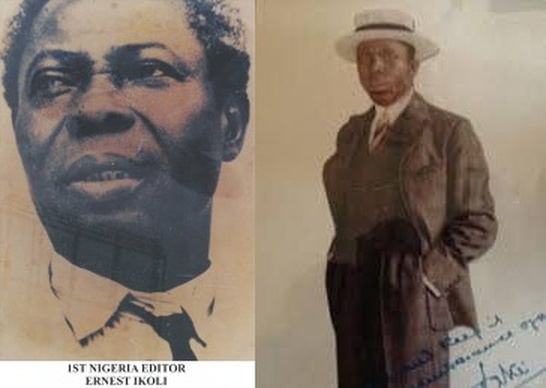
The Ernest Sisei Ikoli Foundation has described Chief Ernest Ikoli, a Nigerian nationalist, politician and pioneering journalist, as a crusader of truth and a symbol of justice.


The foundation made the remark in a statement issued on Wednesday in Lagos to mark Ikoli’s posthumous birthday anniversary.


The statement, signed by the Executive Vice Chairman of the foundation, Chief Anthony George-Ikoli (SAN), praised the late icon for his contributions to Nigeria’s political development, journalism and the fight against colonial rule.


It quoted the foundation as saying, “Chief Ernest Ikoli was a reformer, politician and a great journalist. He campaigned for the birth of the Second Republic and departed, saying his work was done with the attainment of the country's political independence.”


Ikoli, a former assistant editor of the Lagos Weekly Record, first editor of the Daily Times of Nigeria and publisher of African Messenger, was also commended for mentoring journalists, politicians and teachers.


The foundation noted that he played key roles in the formation and activities of notable organisations, including the Universal Negro Improvement Association, People’s Union, Nigeria Youth Movement and the Action Group.


According to the statement, Ikoli promoted unity across ethnic lines, saying, “Chief Ernest Ikoli saw all Africans as one. There was no Igbo, Hausa, Yoruba or Ijaw. There was only one Nigeria, one Africa and one destiny.”


The foundation further applauded him for advancing the struggle for Nigeria’s independence from British colonial rule and for shaping ethical standards in politics and labour movements.


It added, “Chief Ernest Ikoli was endowed with exceptional powers and qualities. He was a good man, a courageous man and an inspiration to many.”


The statement highlighted his advocacy for the emancipation of Nigerians, his opposition to colonialism and imperialism, and his efforts to influence governance towards equality and inclusiveness.


It also credited him with promoting programmes for national development, widening participation in governance and improving workers’ conditions through protests and legislation.


The foundation stated, “Chief Ernest Ikoli wanted a united, industrialised and economically self-reliant nation,” adding that he was committed to representative democracy and open government.


Ikoli was also described as an intellectual with strong organisational skills, remarkable oratory and deep interest in politics, economics and social history.


The foundation noted that he worked alongside notable nationalists such as Herbert Macaulay, Nnamdi Azikiwe, Obafemi Awolowo and Ahmadu Bello in the struggle for Nigeria’s independence.


Born on March 25, 1893, in Nembe, Ikoli died on Oct. 21, 1960, at the age of 67 and was buried at Ikoyi Cemetery.


Enjoyed this article? Share it with friends!