






Top Headlines

Nigeria Deepens Early Warning System to Avert Violent Conflicts

Published on December 18, 2025 | By Admin

Share with friends:

news

Nigeria has strengthened its Early Warning–Early Response framework to prevent violent conflict, with the Federal Government reaffirming its commitment to data-driven and collaborative peacebuilding.

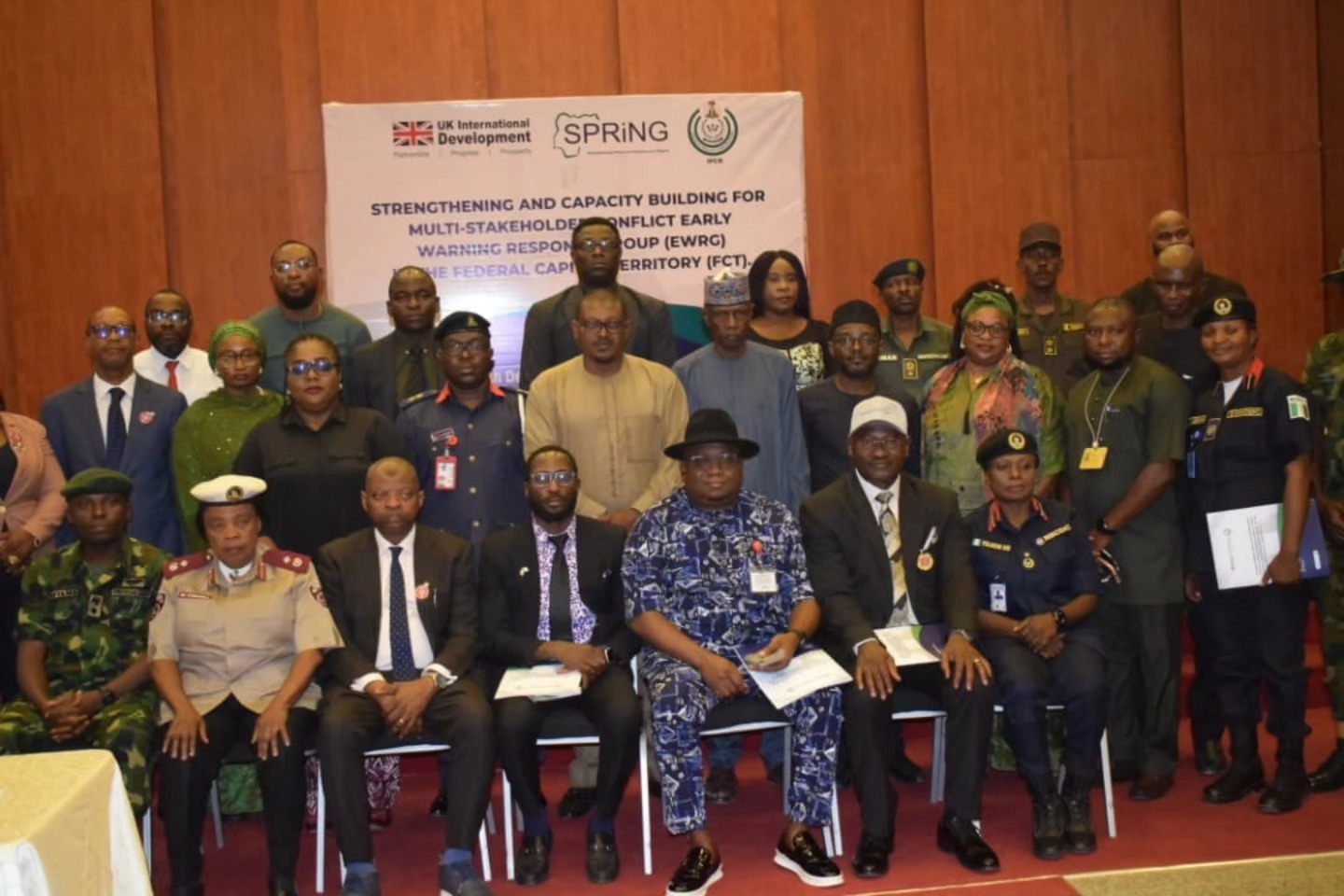
This was the focus of a Capacity Building Engagement for the Multi-Stakeholder Conflict Early Warning Response Group (EWRG), held on Dec. 17 at the Institute for Peace and Conflict Resolution (IPCR), Abuja.

The engagement was organised by IPCR in collaboration with the Strengthening Peace and Resilience in Nigeria (SPRING) Project, with support from the United Kingdom’s Foreign, Commonwealth and Development Office (FCDO).

Speaking on behalf of the Minister of Foreign Affairs, Ambassador Yusuf Maitama Tuggar, OON, the ministry’s spokesperson, Mr. Kimiebi Imomotimi Ebienfa, said Nigeria considered conflict prevention, early warning and rapid response as core national security and foreign policy priorities.

Ebienfa said the Federal Government remained committed to strengthening coordinated response mechanisms that translate early warning signals into timely action.

He commended IPCR and its partners for convening the engagement at a critical time, noting that inclusive, multi-stakeholder cooperation was essential to addressing Nigeria’s complex security challenges.

Participants at the event included representatives of key security agencies, ministries, departments and agencies (MDAs), development partners, civil society organisations, women groups, transport unions and the media.

Institutions represented included the Ministry of Foreign Affairs, Nigerian Army, Department of State Services (DSS), Nigeria Police Force, Nigeria Security and Civil Defence Corps (NSCDC), Nigerian Correctional Service, National Emergency Management Agency (NEMA), Federal Road Safety Corps (FRSC), National Boundary Commission, National Orientation Agency, National Union of Road Transport Workers (NURTW) and the British High Commission.

Earlier, the Director-General of IPCR, Dr. Joseph Ochogwu, said Nigeria’s major challenge in conflict management remained the gap between early warning signs and effective response.

Ochogwu said the engagement was designed to strengthen coordination, improve information sharing and enhance the capacity of stakeholders to act swiftly to prevent violence.

He expressed optimism that the outcomes of the meeting would improve national and sub-national responses to emerging security threats.


Enjoyed this article? Share it with friends!