










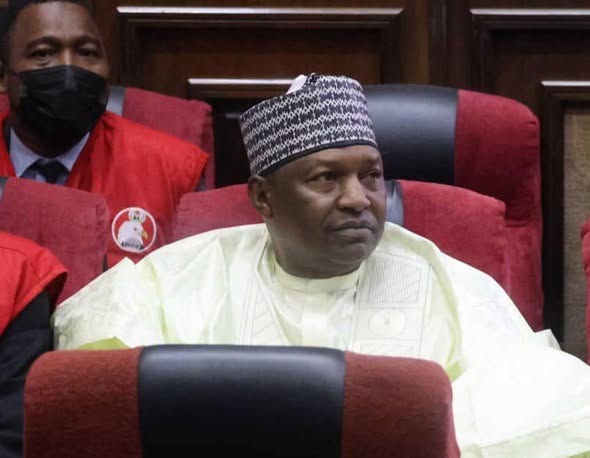
There comes a moment in every public scandal when noise exhausts itself and truth quietly demands an audience. That moment has arrived.
Following the reported remand of Abubakar Malami, SAN, by a Federal High Court in Abuja over charges brought by the EFCC, Nigeria’s media space has erupted — not with sobriety or restraint, but with a familiar choreography of triumphalist headlines, insinuations and editorial glee. At the centre of this spectacle stand TVC, The Nation and TheCable, three influential platforms whose coverage exposes not just bias, but a deeper ethical crisis within Nigerian journalism.
Let one point be clear: appearing in court is not guilt. Remand is not conviction. This is not a defence of Malami. It is a defence of due process, of the law, and of journalistic conscience.
What we are witnessing is not reporting; it is a media trial.
From headline framing to commentary tone, these outlets did not first ask the essential questions: What exactly are the charges? What evidence has been presented? What does the law require at this stage? Instead, they asked a more convenient one: how can this moment be converted into moral spectacle?
Predictably, legal proceedings were clothed with political emotion, ethnic subtexts were quietly smuggled in, and outrage was packaged and sold as news.
This is where the Malami case becomes larger than Malami.
For years, many Nigerians have voiced concerns — sometimes quietly, sometimes angrily — that sections of the media operate not as neutral arbiters, but as interested actors. Once a politically inconvenient figure enters a courtroom, nuance disappears. The presumption of innocence collapses. Context is buried. In its place emerges a ready-made narrative of villainy.
What ethical standard is served when insinuation replaces verification?
Which journalistic code permits conviction by headline?
