










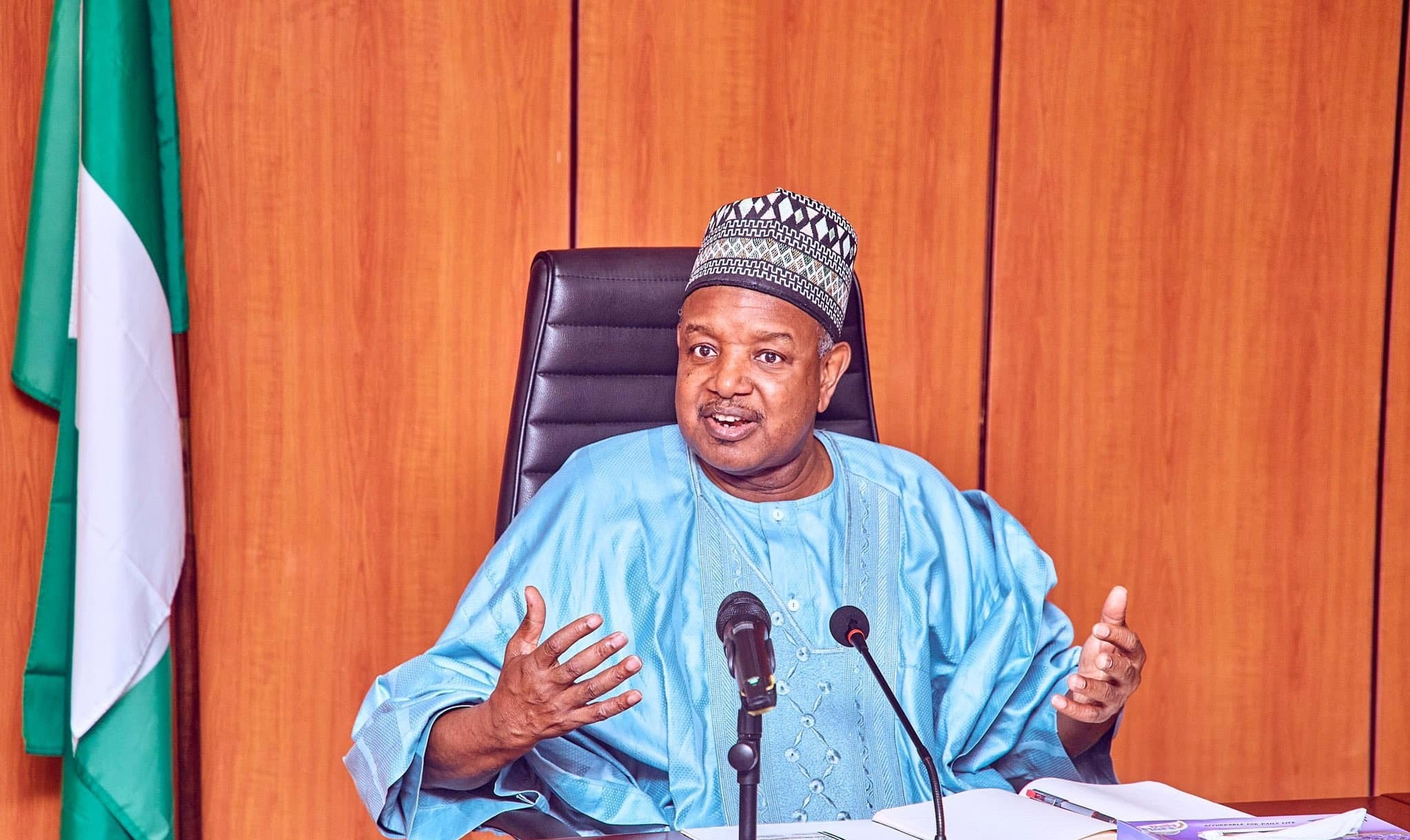
The Minister of Budget and Economic Planning, Sen. Abubakar Bagudu, said that President Bola Tinubu’s ongoing economic reforms are progressing well and has the unusual outcome of strengthening political consensus in the country.
Bagudu made the statement during a meeting with officials from the Agence Française de Dévelopement (AFD) Microeconomic Risk Analysis Due Diligence Mission, in Abuja on Wednesday.
He said that under Tinubu’s leadership, the nation’s federal system has been strengthened with better coordination among the federating units through the effective management of the National Economic Council.
Bagudu said that the body was constitutionally responsible for guiding the country’s economic growth.
“The reforms have improved cooperation between the executive and legislative arms of government.
“The National Assembly has been very supportive of the President’s bold economic initiatives, of equal importance is the friendly relationship among the federal, state, and local governments,” the minister said.
He said that the macroeconomic reforms implemented over the past two and half years have begun to show tangible results, including improved macroeconomic stability, investor confidence and an unusual yet notable increase in political cohesion across the federation.
The minister said that despite regional political instability and the challenging timing of reforms, Nigeria has remained committed to implementing bold economic measures.
He said that the increasing political consensus around these reforms has helped stabilise the exchange rate, maintain investor confidence and reduce the usual pre-election uncertainty often linked with emerging markets.
Bagudu reiterated the president’s economic vision, which aimed to develop a one-trillion-dollar economy within the next five years, driven by inclusive and decentralised growth.
He said that the heart of this vision is the Renewed Hope Ward Development Plan, a grassroots-driven initiative designed to map the country’s economic potential across its 8,809 wards, gather priorities from the local level up to the national stage, and promote a fairer distribution of growth and federal resources.
