










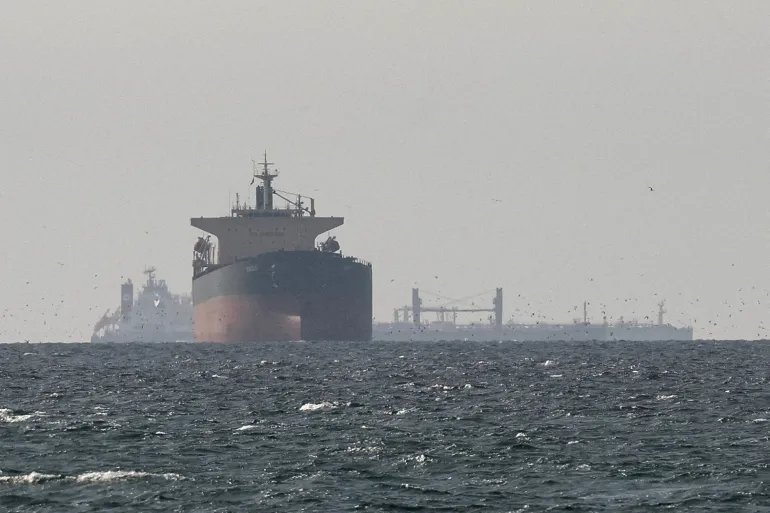
European leaders have rejected demands by United States President Donald Trump to help ensure freedom of navigation in the Strait of Hormuz as foreign ministers from the European Union gathered in Brussels to discuss skyrocketing oil prices during the ongoing US-Israeli war on Iran.
German Foreign Minister Johann Wadephul said on Monday that Berlin had no intention of joining military operations related to the conflict, according to Reuters, as cited by Al Jazeera.
“We expect from the US and Israel to inform us, to include us into what they’re doing there and to tell us if these goals are achieved,” Wadephul told reporters ahead of the meeting in Brussels.
“Once we have a clear picture of that, we believe we need to move into the next phase, namely defining a security architecture for this entire region, together with the neighbouring states,” he added.
Wadephul also said the North Atlantic Treaty Organisation (NATO) had not made any decision about assuming responsibilities in the Strait of Hormuz after Trump called on allies to form a naval coalition to secure the strategic waterway.
About one-fifth of the world’s oil shipments pass through the strait.
The waterway has effectively been shut down following the escalation of the conflict, which has seen the United States and Israel launch attacks across Iran since February 28. Iran has retaliated with missile and drone strikes across the wider Middle East, sending global energy markets into turmoil.
Trump’s call for international support to secure the strait has been met with resistance from several European countries despite surging oil and gas prices.
Greek government spokesman Pavlos Marinakis said Athens would not take part in any military operations in the Strait of Hormuz.
Similarly, Italian Foreign Minister Antonio Tajani said Italy was not involved in any naval missions that could be extended to the area.
However, Danish Foreign Minister Lars Lokke Rasmussen said Europe should remain open-minded about ensuring freedom of navigation in the strait even if it did not support the decision by the United States and Israel to go to war with Iran.
“We must face the world as it is, not as we want it to be,” Rasmussen said, adding that the European Union must decide on a plan “with a view towards de-escalation”.
Meanwhile, the United Kingdom said it was working on a collective plan aimed at reopening the Strait of Hormuz and restoring freedom of navigation in the region, although officials warned the process would not be easy.
