










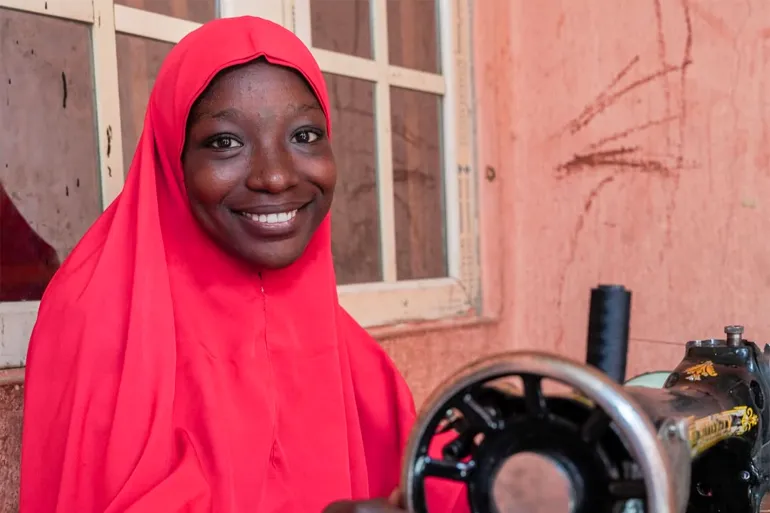
Safiya Musa, a displaced widow in Jibia, uses sewing skills acquired through a UNDP programme to support her family after losing her husband and two children to bandit attacks in Katsina State.
Safiya Musa, a widow displaced by bandit attacks in Katsina State, says learning tailoring has helped her rebuild her life after losing her husband and two children to violence.
Safiya, who now lives in a camp for internally displaced persons (IDPs) in Jibia Local Government Area, shared her experience in a report published by Al Jazeera on Thursday.
She said armed bandits attacked Kankara community in 2023, killing her husband, who was returning from his farm, and her two young children during the raid.
According to her, the family had relocated from Batsari to Kankara in search of a better life before tragedy struck.
"Minutes later, silence overwhelmed the atmosphere," she recalled.
"Then I started thinking about my husband, who had left for the farm, and my children, who were outside playing with other kids."
Safiya said she later fled to Batsari to reunite with her three surviving children before another attack forced the family to seek refuge in Jibia.
She said life in displacement was difficult, as she depended on menial jobs and occasional support to feed her children.
Her fortunes changed after she was selected for a handbag-making training programme organised by the United Nations Development Programme (UNDP) under its Climate Security Project.
The initiative provides vocational training, sewing machines and start-up materials to women affected by conflict to enable them establish small businesses.
Safiya said the skills had restored her dignity and provided a stable source of income.
