









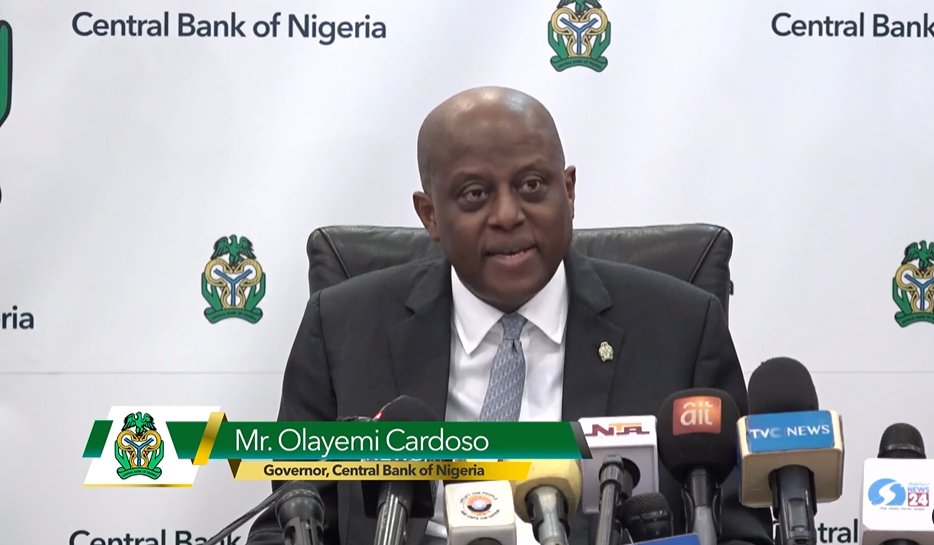
The Central Bank of Nigeria (CBN) has unveiled its 2026 monetary policy agenda, with a key focus on achieving a stable naira, reducing inflation to single digits, and strengthening the nation’s financial system.
The CBN Governor, Olayemi Cardoso, disclosed this on Thursday at the 2026 First Monetary Policy Forum held in Abuja.
Cardoso said the apex bank would prioritise exchange rate stability while consolidating recent economic gains and improving liquidity within the banking sector.
“Our next phase is focused on consolidation: anchoring inflation firmly on a downward trajectory toward a single-digit level, sustaining exchange-rate stability, strengthening reserve buffers through organic inflows, deepening interbank market development, and enhancing the robustness of our monetary-policy transmission,” he said.
He explained that achieving a stable naira and broader economic stability would require strong collaboration between the CBN and fiscal authorities, disciplined policy implementation, and active stakeholder engagement.
The CBN governor noted that the outlook for Nigeria’s economy remains cautiously optimistic, though risks such as global financial tightening and geopolitical tensions—particularly in the Middle East—could impact oil prices and the country’s economy.
On the domestic front, Cardoso projected economic growth at 4.49 per cent, supported by ongoing reforms, improved oil production, and a market-driven foreign exchange system.
However, he warned that food supply challenges, infrastructural deficits, and election-related spending could exert pressure on the economy.
Also speaking, the Minister of Finance and Coordinating Minister of the Economy, Wale Edun, said the Federal Government is targeting about seven per cent GDP growth to improve living standards.
“Our broader objective remains economic transformation. In the near term, we are targeting GDP growth of about 7 per cent—roughly double the pace of inflation,” Edun said.
He noted that balancing inflation control with economic growth would remain a key priority, adding that interest rates would continue to play a critical role in managing inflation.
Edun also stressed the need for coordination among government institutions to achieve macroeconomic stability and commended ongoing efforts to improve transparency in the foreign exchange market.
In his remarks, the CBN Deputy Governor, Economic Policy Directorate, Mohammed Sani Abdullahi, said Nigeria’s economic environment has improved since the last Monetary Policy Forum in January 2025, citing easing inflation, improved foreign exchange conditions, and rising investor confidence.
He, however, emphasised that sustaining these gains would require continued reforms, stronger policy coordination, and deeper engagement with stakeholders.
The forum underscored the importance of collective responsibility among policymakers and stakeholders in ensuring a stable naira and a resilient Nigerian economy.

