By Jamilu M Magaji,
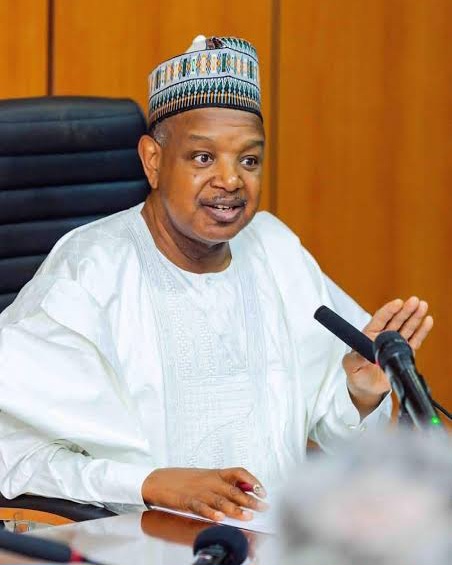
Political influence is often measured by electoral victories and public office. However, some leaders remain relevant long after leaving office because they continue to engage directly with the people. In Kebbi State, Senator Abubakar Atiku Bagudu provides an example of this reality.
Sen. Bagudu served as Governor of Kebbi State from 2015 to 2023 and currently serves as Nigeria’s Minister of Budget and Economic Planning. Though he no longer occupies an elective position in the state, he remains a visible and influential figure within the All Progressives Congress (APC) and grassroots political activities across Kebbi.
His continued relevance is rooted not only in political stature but also in sustained community engagement through welfare interventions, vocational empowerment programmes, youth-focused sports initiatives, agricultural advocacy and support schemes coordinated largely through his Special Assistant, Bashar Aliyu Buhari.
Over the years, the Bagudu political structure has maintained regular interaction with diverse groups, including former public office holders, youths, professionals, artisans, persons with disabilities and community organisations. Significantly, these engagements have continued beyond election seasons, helping to sustain relationships and strengthen grassroots connections.
One recent example was the annual Sallah welfare intervention, through which financial support was reportedly extended to former legislators, former local government chairmen, former commissioners, retired civil servants, media practitioners, artisans, musicians, barbers, leprosy patients and other vulnerable groups. While welfare programmes are common in Nigerian politics, the consistency of such interventions outside campaign periods has helped sustain grassroots visibility and goodwill.
The political family has also prioritised vocational empowerment as a pathway to self-reliance. A recent skills acquisition programme graduated 70 tailoring trainees after about eight months of training, with each beneficiary receiving a sewing machine to establish a source of income.
Beyond immediate financial support, such initiatives provide practical skills and tools that can create sustainable economic opportunities for beneficiaries.
Sports development has equally become a key pillar of grassroots engagement. Competitions such as the Tinubu/Kaura Unity Cup and other football tournaments have attracted more than 60 teams from across communities. Organisers also provided grants, financial support, tricycles and other assistance packages to participating teams and football committees.
Similarly, grassroots sports programmes help promote youth engagement, talent discovery, social cohesion and peaceful community interaction while creating opportunities for economic participation.
At the national level, Bagudu has consistently advocated policies aimed at increasing youth participation in agriculture and agribusiness. Through his support for initiatives such as the Youth Agribusiness Land Trust Fund (YALTF), he has highlighted access to land as a major challenge confronting young Nigerians interested in agriculture. His advocacy extends beyond farming to agribusiness value chains, technology-driven agriculture, livestock production, fisheries and food processing.
Furthermore, Bagudu's activities at both the state and national levels align with key priorities of President Bola Tinubu's Renewed Hope Agenda, including economic growth, job creation, poverty reduction, food security and youth empowerment. As Minister of Budget and Economic Planning, he plays a central role in coordinating policies aimed at achieving these objectives. His support for skills acquisition, youth empowerment, agricultural development and community-based interventions in Kebbi reflects many of the priorities being pursued by the Federal Government, creating a link between national development goals and grassroots impact.
Bagudu’s influence is also reinforced by a political résumé that includes service as Senator representing Kebbi Central, two-term Governor of Kebbi State, Chairman of the Progressive Governors’ Forum and now Minister of Budget and Economic Planning.
Within APC circles, his influence remains evident. His participation alongside Governor Nasir Idris Kauran Gwandu in major party activities has been viewed by many political observers as a reflection of his continuing role in promoting party cohesion and mobilisation across Kebbi State.
A major factor behind these sustained engagements is the role played by Hon. Bashar Aliyu Buhari, a key aide to the minister who serves as a vital bridge between leadership and grassroots communities. Through mobilisation, coordination and direct interaction with beneficiaries, he has helped translate broader political objectives into practical programmes that reach people at the grassroots level.
The partnership demonstrates a model in which political relevance is sustained not merely through office-holding but through continuous engagement and investment in people-centred initiatives.
In an era when many political structures become dormant outside election cycles, the Bagudu example presents a different approach. The available evidence suggests that his enduring influence is closely tied to consistent welfare interventions, vocational empowerment programmes, youth engagement initiatives, agricultural advocacy and community support mechanisms that have continued after his tenure as governor.
In the final analysis, whether viewed from the perspective of political strategy, community development or grassroots mobilisation, one lesson stands out: enduring political relevance is sustained not only by electoral success but also by the ability to maintain meaningful connections with the people through continuous service and measurable impact.
Jamilu Magaji, a Public Affairs Commentator in Birnin Kebbi writes via: mjmagaji@gmail.com.