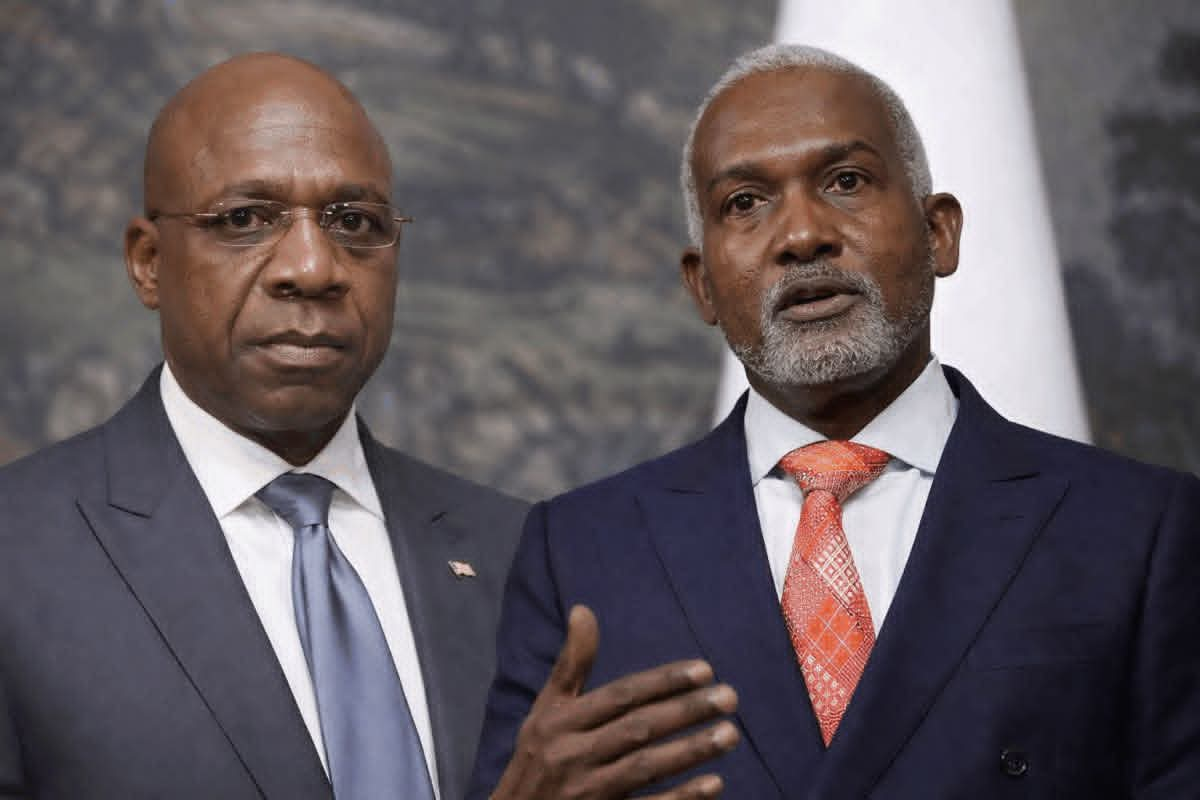
The Federal Government of Nigeria and the Government of the Republic of Angola have signed a bilateral agreement aimed at easing the movement of diplomats and government officials between both countries.
This is contained in a statement issued on Monday by Nigeria’s Minister of Foreign Affairs, Yusuf Tuggar, through the ministry’s spokesperson, Kimiebi Ebienfa.
The draft agreement, which focuses on visa exemption for holders of diplomatic and official/service passports, was formally signed on February 15, 2026.
Tuggar, who led the Nigerian delegation, said the agreement was signed on the margins of the 39th Ordinary Session of the Heads of State and Government of the African Union, held in Addis Ababa.
The Angolan delegation was led by the Minister of International Relations, Tete Antonio.
The minister expressed satisfaction over the signing of the agreement, describing it as long overdue and a timely step toward strengthening bilateral engagement.
According to him, the agreement will significantly enhance diplomatic and official relations between the two brotherly countries by easing travel procedures for holders of diplomatic and official/service passports.
“Visa exemption arrangement will facilitate smoother official exchanges, deepen institutional cooperation, and create broader opportunities for joint initiatives and dialogue.
“It will also deepen partnership by enabling authorised government officials from both sides to move more freely and efficiently without administrative hindrances,” Tuggar said.
He noted that Nigerian–Angolan relations are rooted in a shared history dating back to the period of ideological conflict between the National Union for the Total Independence of Angola (UNITA) and the Popular Movement for the Liberation of Angola (MPLA).
Tuggar described the agreement as a firm declaration of African independence in decision-making and Nigeria’s solidarity with the Angolan people in their struggle, which laid the foundation for the strong diplomatic and political ties that exist between both countries today.
For his part, Antonio expressed appreciation for the enduring and historic bond between Angola and Nigeria, particularly during the anti-colonial struggle and the quest for national independence across Africa.
He highlighted Nigeria’s principled leadership role in West Africa, noting that the country stood firmly with frontline states by providing diplomatic and political support that contributed meaningfully to Angola’s liberation.
Antonio described the agreement as a practical and forward-looking milestone that would further consolidate long-standing diplomatic ties while opening new avenues for closer official engagement.
“It is instructive to note that, in light of the well-established historical ties and record of mutual solidarity between Nigeria and Angola, the signing of this agreement can rightly be regarded as long overdue.
“Its conclusion represents not merely a procedural diplomatic development, but a substantive reaffirmation of the shared values, cooperation, and trust that have characterised relations between both countries over the years,” he said.
Antonio added that the agreement would reinvigorate and modernise diplomatic partnership by removing administrative barriers to official travel.
“By facilitating easier movement for holders of diplomatic and official/service passports, it is expected to strengthen mutual understanding, enhance policy coordination, and foster stronger working chemistry between relevant institutions and authorities on both sides,” he said.
NAN