
Top Headlines

Atiku to Tinubu: Suffering is not economic policy

Published on August 22, 2026 | By Abdulhamid Abubakar
Share with friends:

news
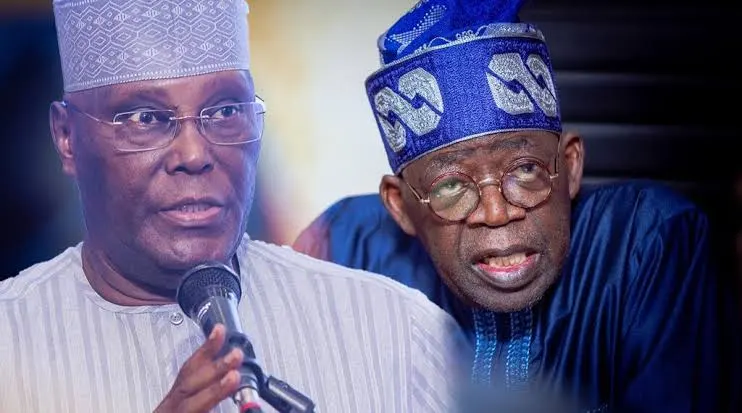
Atiku and Tinubu


Former Vice President Atiku Abubakar has criticised President Bola Tinubu’s economic policies, saying increased government revenues cannot be regarded as economic progress while Nigerians face rising living costs and declining purchasing power.

Atiku, in a statement by his Senior Special Assistant on Public Communication, Phrank Shaibu, also defended his proposed intervention in the petroleum sector.

He said the proposal was not a return to the petrol subsidy regime but a targeted, budgeted and time-bound production-support mechanism tied to domestic output and subject to independent auditing.

Atiku said the removal of petrol subsidy, naira depreciation and rising food and transportation costs had worsened hardship across the country.

“Economic prescriptions respond to prevailing conditions. Even a first-year economics student understands ceteris paribus — other things being equal. But other things are no longer equal in Tinubu’s Nigeria,” he said.

The former vice president also faulted the administration’s use of increased Federation Account Allocation Committee (FAAC) revenues as evidence of economic progress.

He said higher allocations to states meant little if Nigerians continued to lose purchasing power.

“Hungry Nigerians cannot boil FAAC figures for dinner. Businesses cannot power factories with presidential speeches, workers cannot pay transport fares with macroeconomic grammar, and parents cannot settle school fees with statistics,” he said.

Atiku said a government could not claim to be reforming the economy if its revenues increased while citizens became poorer.

“A government that grows richer while its citizens grow poorer is not reforming an economy. It is extracting from its people,” he said.

He also questioned the claim that petrol subsidy had been completely eliminated, citing energy-security costs and petroleum under-recoveries reportedly contained in NNPC’s audited accounts.

According to him, the accounts showed about N17.5 trillion in energy-security costs and petroleum under-recoveries, including N7.13 trillion classified as Energy Security and N8.67 trillion in under-recoveries.

“So what exactly did Tinubu remove? If subsidy is dead, why are under-recoveries alive?” he asked.

Atiku further rejected the argument that higher FAAC allocations were a major benefit of subsidy removal.

“You do not build a federation by impoverishing citizens so that Abuja can send bigger cheques to governors. That is robbing households to subsidise governments,” he said.

He urged states to develop productive economies, attract investment and broaden their tax bases rather than depend increasingly on federal allocations.

Atiku also challenged the Federal Government to explain what he described as about N30 trillion in Federation Account revenues, deductions, savings and transfers, as well as N12.8 trillion allocated to the Service-Wide Vote in the 2026 budget.

“If Tinubu can mobilise an army of propagandists to attack Atiku within hours, surely he can find one accountant to explain his books,” he said.

The former vice president said the success of economic reforms should ultimately be measured by improvements in citizens’ living standards, rather than the size of government revenues.

“The real ignorance is believing suffering is economic policy,” Atiku said.

He added that Nigerians had “paid enough for Tinubunomics” and should not be subjected to another four years of what he described as the administration’s economic policies.

Enjoyed this article? Share it with friends!








