










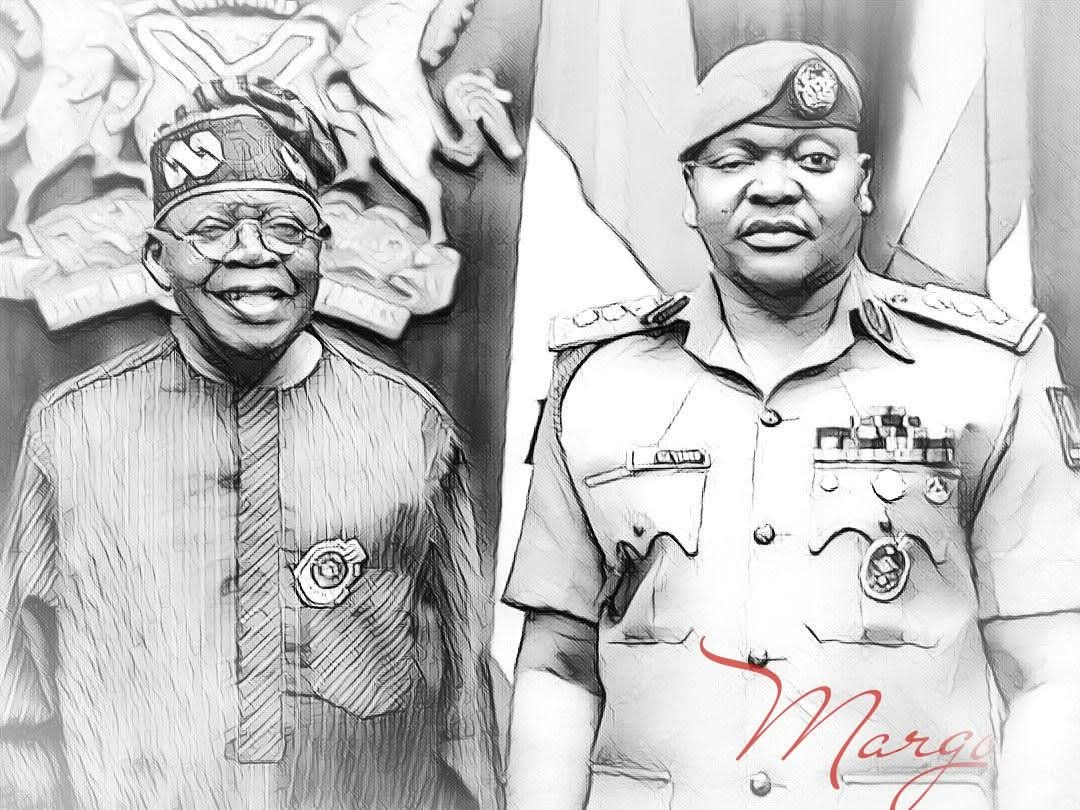
By Yushau A. Shuaib
Mr President, sir, I hope this open letter will not be misconstrued, as happened above six years ago, precisely in January 2020, when I wrote a memo to former President Muhammadu Buhari urging him to disengage service chiefs who had overstayed their tenures and whose continued stay was eroding morale within the armed forces.
In that earlier intervention, I argued—correctly, as events later proved—that retaining service chiefs beyond their statutory tenure violated military regulations, blocked career progression, and coincided with a worsening security situation. The service chiefs were General Gabriel Olonisakin (CDS), Lt. Gen. Tukur Buratai (Army), Vice Admiral Ibok Ete-Ibas (Navy), and Air Marshal Sadique Abubakar (Air Force).
The prolonged stay of those chiefs forced many senior officers into premature retirement and denied entire course generations their rightful opportunity to rise to the top. I urged President Buhari to allow the chiefs to retire “when the ovations were loudest,” so the system could renew itself with fresh ideas and restored confidence.
The backlash was fierce. I was threatened and publicly smeared by sycophants, including a self-styled military apologist named Terrence Kuanum, who accused me of being on the payroll of terrorists. I reported the matter to all relevant security agencies. Only the Police acted, but they could not arrest for fear of the power-that-be, and I eventually sought judicial redress in a case still pending before Justice Suleman Belgore of the Federal Capital Territory High Court.
I recount this history because a similar atmosphere now surrounds my decision to speak out again. A recent report by PRNigeria indicates that your decision to promote your Aide-de-Camp (ADC), Colonel Nurudeen Yusuf, to the rank of Brigadier General has generated deep unease within military circles. If implemented, it would mark a historic departure from long-established military tradition, potentially making him the first general officer to serve as ADC to a civilian president in Nigeria.
Colonel Yusuf was promoted to his current rank in January 2025. Elevating him again in less than a year would amount to a second rapid promotion, justified by comparisons with practices in other services such as the Police or DSS. But such comparisons miss a critical point: the Nigerian Armed Forces operate under a rigid, globally recognised promotion system built on seniority, merit, qualifications, time-in-rank, and competitive examinations. Deviating from this framework for political convenience risks undermining the very spine of military professionalism.
Historically, ADCs to Nigerian leaders have ranged from junior officers to Colonels, reflecting both tradition and prudence. Since the return to civil rule in 1999, civilian presidents have consistently appointed Colonels as ADCs—an arrangement that balances professional competence with respect for hierarchy. Elevating an ADC to general-officer rank while still serving in that role would be unprecedented and deeply destabilising.
Mr President, while you are constitutionally empowered as Commander-in-Chief—particularly at a time when a recent Supreme Court ruling has further expanded executive authority to include the declaration of a state of emergency and the removal of elected officials without prior National Assembly approval—leadership ultimately demands restraint. This is especially critical in institutions like the armed forces, where discipline, hierarchy, seniority, and predictability are not mere conventions but sacred pillars of stability and professionalism.
