










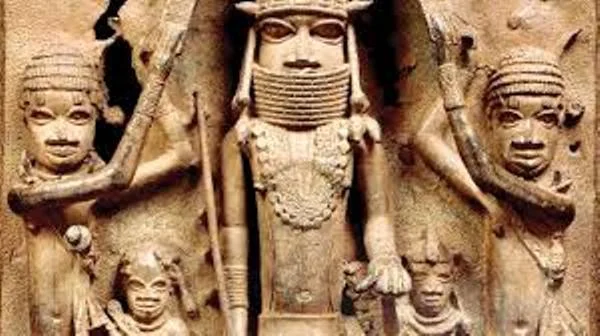
Cambridge University has formally transferred legal ownership of 116 Benin artefacts in its Museum of Archaeology and Anthropology (MAA) to Nigeria’s National Commission for Museums and Monuments (NCMM).
The university said this is a major step in its on-going efforts to address colonial-era dispossession of cultural heritage.
The decision, announced by the university on Monday, followed a formal request made by the NCMM in January 2022 for the return of objects taken by British troops during the 1897 sacking of Benin City.
The university’s Governing Council supported the claim, and authorisation was subsequently granted by the UK Charity Commission.
The artefacts, mainly cast in brass, also ivory and wooden sculptures, were seized during the so-called ‘Punitive Expedition’ mounted by British forces in February 1897, following a violent trade dispute the previous month.
The university said arrangements for the physical transfer of most of the objects would be made in due course.
The university, however, said a small number would remain in Cambridge, on loan and on display, at MAA, where they will continue to be accessible to visitors, students and researchers.
The university said its decision aligned with similar commitments made by museums in the UK, the United States and Europe to return Benin material taken during the colonial period.
It said that, MAA, which is one of several UK institutions holding artefacts from Benin, had been involved in long-term research, dialogue and engagement with Nigerian stakeholders, including representatives of the Benin Royal Court, artists, academics and students.
It said MAA curators had undertaken study and liaison visits to Benin City since 2018, meeting the Oba, members of the Royal Court, state and Federal Government officials.
The university also hosted the Benin Dialogue Group in 2017 and received delegations from the NCMM and the Royal Court in Cambridge in 2021.
Reacting to the development, the Director-General of NCMM, Olugbile Holloway, described the transfer as a turning point.
