










By Ibrahim Abubakar Jombali,
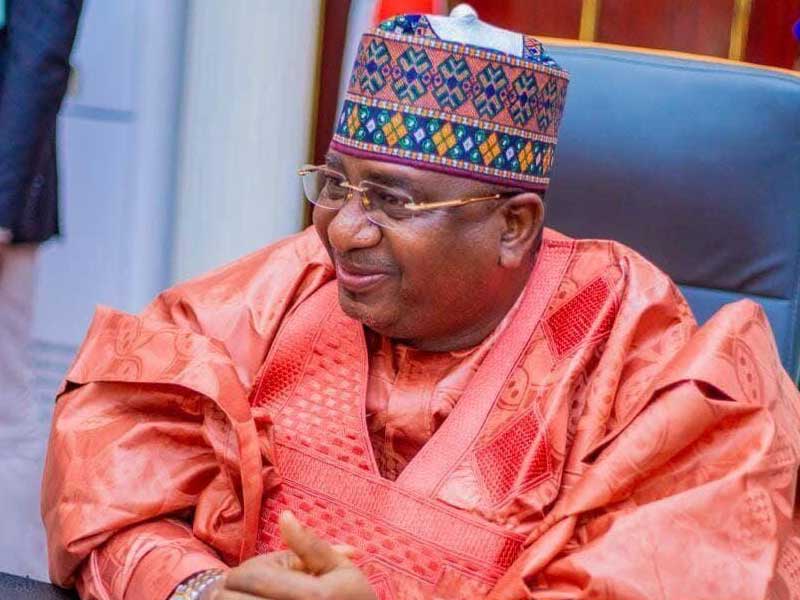
Kebbi, Nigeria’s Land of Equity, is fortunate to have a governor who understands the teaching profession not merely as a former practitioner, but as a calling that continues to shape his approach to public service.
On May 29, 2023, Kebbi welcomed Comrade Dr. Nasir Idris, Kauran Gwandu, as governor. His emergence brought something distinctive to Government House: a teacher assumed the responsibility of leading the state.
Experience has shown that some professions provide occupations, while others become enduring identities.
A soldier may retire from the barracks. A lawyer may leave the courtroom. A politician may eventually leave public office. But a teacher never truly leaves the classroom. The chalk may be set aside, the blackboard erased and the school bell silenced, yet the teacher remains committed to shaping minds, nurturing dreams and preparing future generations.
A teacher inspires.
That enduring truth finds a compelling expression in Kebbi State, where a former teacher occupies Government House and brings to governance values associated with the profession—patience, discipline, commitment, investment in human potential and faith in the future.
As the world marks World Teachers’ Day, celebrating the quiet architects of civilisation and custodians of knowledge, Kebbi has a special reason to reflect on the occasion.
At the helm of its affairs is a man whose journey from the classroom to the highest office in the state illustrates the transformative power of education.
His story is not simply that of a teacher who became governor. It is the story of a governor who never stopped being a teacher.
Long before the responsibilities of statecraft rested on his shoulders, Nasir Idris understood the realities of the classroom. He knew the sacrifices teachers make, the challenges they confront, the hopes they carry and the enormous responsibility entrusted to them in shaping society.
He was not an observer of the profession. He was part of it.
That experience has influenced the policies and priorities of his administration.
In many ways, Governor Idris has brought the classroom into Government House—not physically, but philosophically. The values that define a good teacher—patience, investment in human potential, commitment to long-term outcomes and belief in future generations—are reflected in several aspects of his administration.
Perhaps nowhere is this more evident than in the decision to extend the retirement age of teachers from 60 to 65 years and their years of service from 35 to 40 years.
Beyond its administrative significance, the policy represents recognition of the value of experience and institutional knowledge. It acknowledges that decades spent in classrooms produce expertise that remains valuable to society.
But the Governor’s commitment to teachers has not been limited to policy declarations.
His administration has also pursued measures aimed at improving workers’ welfare, including the implementation of the ₦75,000 minimum wage, payment of salaries and entitlements, restoration of headmaster and assistant headmaster allowances, recruitment of additional teaching personnel and professional development initiatives.
These measures reflect an understanding that the quality of education cannot be separated from the welfare, motivation and capacity of those entrusted with delivering it.
The Nigeria Union of Teachers in Kebbi has also acknowledged some of these interventions, particularly in the areas of remuneration, recruitment, teaching materials and school infrastructure.
Yet perhaps the most visible expression of the administration’s educational priorities is found not in policy documents, but in schools across Kebbi State.
It is seen in renovated classrooms, rehabilitated schools and improved learning environments in communities across the state.
Since assuming office, Governor Idris has placed considerable emphasis on educational infrastructure, with the administration reporting that more than 2,000 schools have been renovated, reconstructed or furnished, alongside the construction of additional schools to expand access to education.
