










By Solomon Dalung
The election of Muhammadu Buhari in March 2015 marked a watershed moment in Nigeria’s democratic history. His victory was anchored on a powerful moral narrative—personal integrity, discipline, frugality, and an uncompromising anti-corruption stance. Buhari’s campaign symbolised a break from elite excess. He famously raised funds from ordinary Nigerians and projected himself as a man untouched by political luxury. This image resonated deeply with a population exhausted by corruption and impunity.
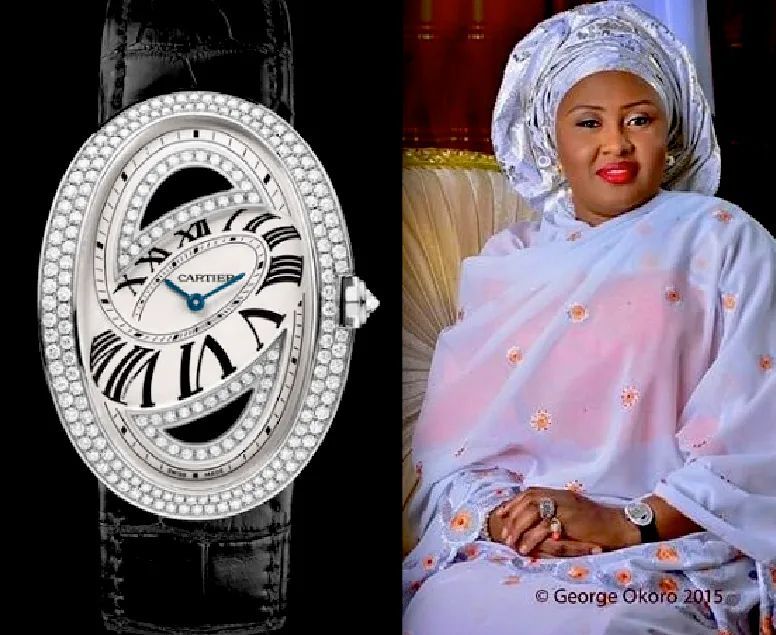
However, shortly after his inauguration, an incident occurred which—though seemingly minor—had far-reaching political consequences. Images circulated on social media showing the President’s wife, Aisha Buhari, wearing a wristwatch identified by some outlets as a Cartier Baignoire Felle diamond watch, reportedly valued at up to $50,000. While supporters argued that cheaper replicas existed, the controversy had already taken root.
In the era of social media, perception quickly hardens into “truth.” Questions flooded the public space: how did this image align with the austere, anti-elitist persona that defined Buhari’s political appeal? The controversy was no longer about a wristwatch but about what it symbolised—the contradiction between preached simplicity and visible privilege.
For President Buhari, whose political capital rested heavily on moral credibility, the incident struck a sensitive nerve. It was not merely a public relations problem but a challenge to the foundation of trust on which his leadership stood. Within inner power circles, it was seen as a serious vulnerability—one capable of unravelling years of disciplined image-building. Concerns grew that unchecked family visibility could damage the carefully constructed narrative of integrity.
This moment marked the beginning of what may be described as the palace power crisis. Political gatekeepers—popularly referred to as the “cabal”—moved swiftly to exploit the situation. Access to the President became increasingly restricted, influence more centralised, and anyone perceived as a threat to entrenched interests was systematically sidelined.
The President’s wife soon found herself isolated. In a political environment already hostile to assertive women, additional layers of aides and security personnel were introduced around the President, ostensibly for protection. In reality, these layers became instruments of control and exclusion. The natural interface between family and leadership was gradually replaced by bureaucratic barriers and political suspicion.
