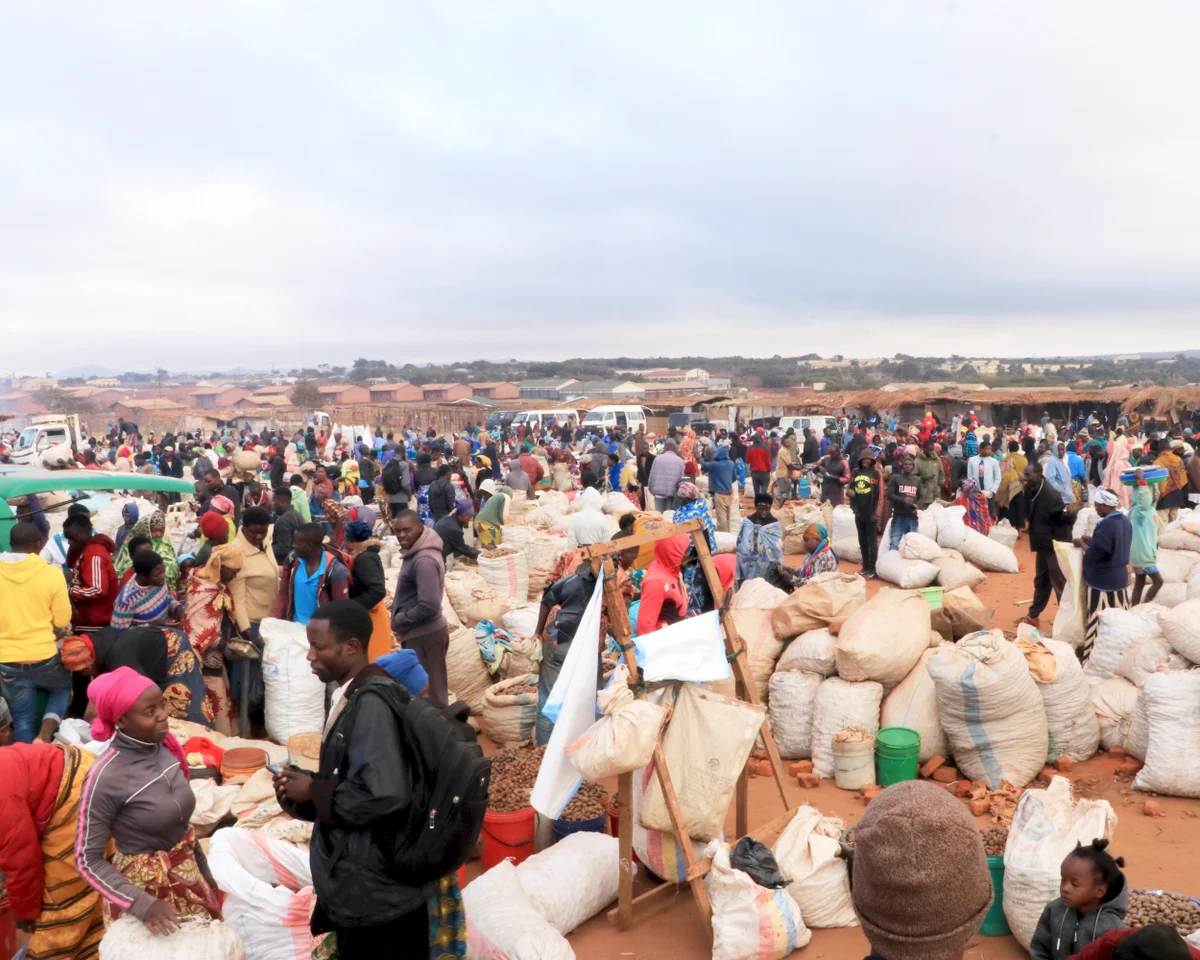
The World Bank has said that more than one-quarter of emerging market and developing economies (EMDEs) remain poorer today than they were before the COVID-19 pandemic, highlighting a widening gap in the global economic recovery.
In its January Global Economic Prospects report, the bank noted that many low-income and fragile countries have yet to recover lost ground nearly six years after the pandemic began.
“More than one-quarter of emerging market and developing economies, particularly low-income countries and those affected by fragility and conflict, still have per capita incomes below 2019 levels,” the World Bank said.
According to the report, while the global economy has shown resilience, the recovery has been uneven.
Nearly 90 per cent of advanced economies have surpassed their pre-pandemic income levels, but many poorer countries continue to struggle, reversing years of progress in living standards.
The bank said global growth performed better than expected in 2025 despite rising trade tensions and policy uncertainty.
It attributed this to stockpiling of traded goods, strong financial market risk appetite, adaptive supply chains, and increased spending linked to artificial intelligence.
However, the report warned that the apparent resilience masks a deeper, long-term slowdown in global growth.
The World Bank projected that the 2020s will be the weakest decade for global economic growth since the 1960s, with average global GDP growth expected to slow to about 2.6 per cent.
This compares with average growth of 5.4 per cent in the 1960s and 4.1 per cent in the 1970s, before declining steadily in later decades.
The bank said the slowdown is driven by structural factors rather than temporary shocks, citing weaker productivity growth, ageing populations in major economies, slowing globalisation, and the lingering effects of past crises such as the 2008 financial crash and the COVID-19 pandemic.
Global growth is projected to edge down to 2.6 per cent in 2026, before ticking up slightly to 2.7 per cent in 2027, as trade growth weakens and firms reduce inventory accumulation.
The report warned that the outlook for developing economies remains fragile, as many EMDEs grapple with high debt levels, limited fiscal space, and increasing climate-related risks that continue to weigh on investment and job creation.
“Without stronger economic dynamism, many EMDEs will struggle to create enough jobs for expanding working-age populations,” the World Bank said.
It urged governments to pursue reforms aimed at diversifying trade, strengthening macroeconomic frameworks, and removing structural bottlenecks.
“To catalyse investment and support long-term growth, policy makers in EMDEs should advance domestic reforms to diversify trade, strengthen macroeconomic frameworks, and remove structural bottlenecks,” the bank stated.
The World Bank also warned that near-term risks to the global outlook remain tilted to the downside, including escalating trade tensions, tighter financial conditions, and renewed inflation pressures.
While broader adoption of artificial intelligence could help support growth, the bank said coordinated global efforts are needed to improve trade conditions, ease financing constraints, and prevent a widening development gap that could leave millions poorer for longer.