










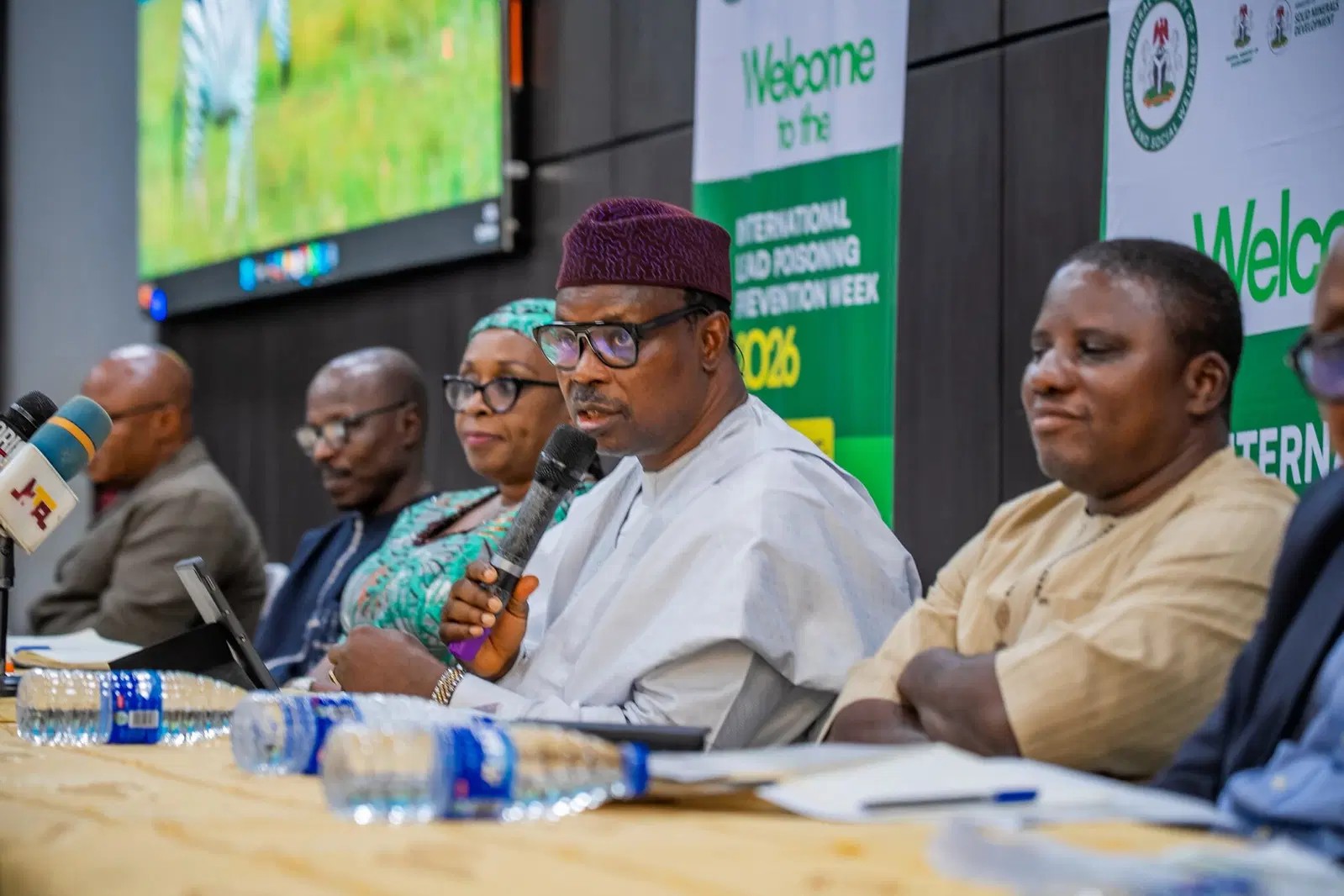
The Federal Government says an estimated 80 million children in Nigeria are exposed to lead poisoning, calling for stronger measures to address the public health and environmental threat.
The Minister of State for Health and Social Welfare, Dr Iziaq Salako, said this on Wednesday in Abuja at the commemoration of the 2026 International Lead Poisoning Prevention Week, themed “From Detection to Prevention.”
Salako said children, women of childbearing age and pregnant women were particularly vulnerable to lead exposure, which could cause serious and lasting health consequences.
“It is a toxic substance capable of affecting multiple body systems, with children, women of childbearing age and pregnant women being particularly vulnerable.
“Exposure can have serious and lasting consequences, while individuals may be exposed without immediate obvious symptoms. This makes prevention, early identification and timely action essential components of any national response,” he added.
The minister said the government had established an Inter-Agency Working Group on Lead Poisoning Prevention and Elimination to coordinate efforts involving relevant Ministries, Departments and Agencies, development partners and other stakeholders.
Salako said experiences in Lagos, Ogun, Sokoto and Zamfara had highlighted different sources of exposure and the need for state-specific interventions.
He cited environmental investigations in Lagos and lead exposure concerns associated with battery recycling in Ogijo, Ogun, as evidence of the need for stronger environmental and occupational controls.
“We cannot treat our way out of lead poisoning; we must prevent exposure wherever possible,” the minister said.
While inaugurating the Five-Year Strategic Plan on Lead Poisoning Elimination in Nigeria (2026–2030), Salako added that a costed three-year national roadmap was being developed to translate the plan’s priorities into time-bound actions.
The plan is aimed at guiding stakeholders on coordinated efforts to prevent exposure, strengthen surveillance and address environmental and occupational sources.
The minister identified stronger monitoring of soil, dust, water, industrial emissions and consumer products, alongside improved regulation, enforcement and laboratory capacity, as priorities.
He urged states, particularly Lagos, Ogun, Zamfara and Sokoto, to develop prevention and control action plans, and called for community involvement in identifying exposure risks.
