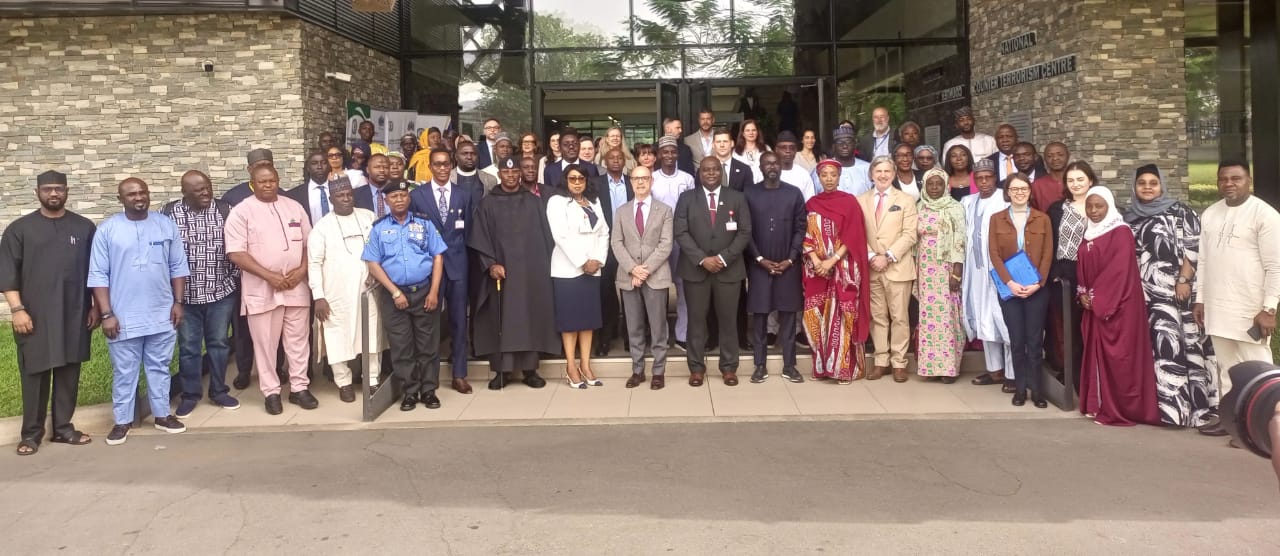
The National Counter Terrorism Centre (NCTC), Office of the National Security Adviser (ONSA), and the Spanish Embassy in Nigeria have called for a coordinated and trauma-informed approach to supporting victims of terrorism.
The call was made on Wednesday at a two-day workshop on support for victims of terrorism, co-organised by the NCTC and the Government of Spain in Abuja.
Speaking at the event, the National Coordinator of NCTC, Maj.-Gen. Adamu Laka, said the initiative was critical to addressing the complex humanitarian challenges posed by terrorist violence. He was represented by the Director of Intelligence, Brig.-Gen. Peter Gbor.
Laka reaffirmed the NCTC’s commitment to advancing a humane, inclusive and coordinated response to terrorism that places victims at the centre of national policies and programmes.
He said the NCTC’s mandate went beyond disrupting terrorist networks to building national resilience, preventing violent extremism and ensuring comprehensive support for victims.
Describing the workshop as a humanitarian call to action, Laka said it highlighted the need for intentional support for victims suffering physical, emotional, psychological and socio-economic trauma.
“The workshop aims to enhance understanding of victims’ needs and rights, promote trauma-informed and gender-sensitive support frameworks, and strengthen collaboration among stakeholders,” he said.
He commended the Spanish Government and other partners for their commitment and urged participants to engage actively.
Also speaking, the Ambassador of Spain to Nigeria, Félix Costale, said bringing perpetrators of terrorist acts to justice remained one of the primary demands of victims.
“Victims must remain at the centre of global counterterrorism strategies, not only because of the duty to provide them with protection and assistance, but also because of the vital role they play in raising awareness and preventing violent extremism,” Costale said.
The envoy noted that Spain had developed a comprehensive protection model that recognises victims’ contributions in education, advocacy and policy development, adding that their experiences serve as powerful tools for prevention.
He said the workshop would deepen empathy, strengthen dialogue and enhance bilateral cooperation between Nigeria and Spain in advancing victim support systems.
In his remarks, the Country Representative of the United Nations Office on Drugs and Crime (UNODC), Cheikh Touré, said the initiative formed part of broader efforts to strengthen Nigeria’s institutional response to victims’ needs and rights.
Touré said victims of terrorism deserved more than sympathy, stressing the need for structured systems that address their physical, emotional and psychological needs.
“Victims should be active agents of change, educators, peacebuilders and advocates,” he said.
He emphasised the need to strengthen frameworks, improve coordination, ensure access to justice and enhance psychosocial, economic and community-based support for victims.
The UNODC official commended the NCTC and the Government of Spain for their leadership in advancing victim-centred counterterrorism initiatives.
The two-day workshop brought together policymakers, security agencies, humanitarian organisations and civil society groups to exchange experiences, identify gaps and propose practical measures to strengthen Nigeria’s victim support architecture.
The engagement is seen as part of Nigeria’s broader shift toward a more humane and inclusive counterterrorism approach that prioritises dignity, justice and hope for victims.(NAN)