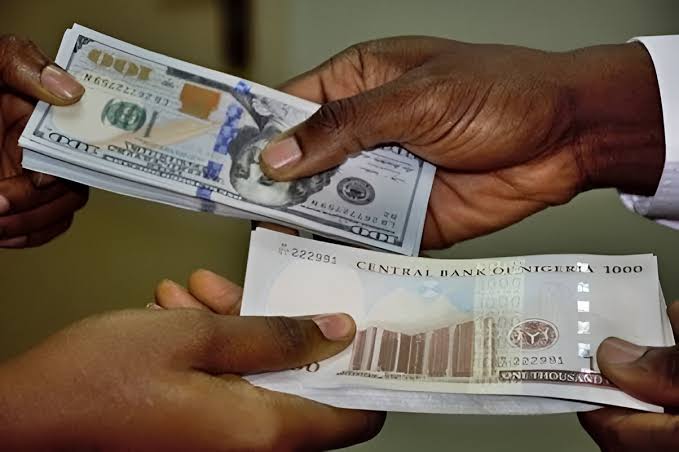
The naira is expected to remain under pressure against the United States dollar throughout 2026, according to economic outlooks released by leading financial analysts.
Speaking at the FirstBank Nigeria Economic Outlook 2026, Chief Economist of Afreximbank, Yemi Kale, said the local currency faces continued strain despite signs of gradual macroeconomic improvement.
Kale’s outlook presents three scenario-based forecasts for the USD/NGN exchange rate, based on assumptions around oil prices, foreign exchange inflows, inflation trends and policy stability.
Under the baseline scenario, the naira is projected to trade between ₦1,350 and ₦1,450 per dollar by the end of 2026.
The forecast assumes moderate improvement in Nigeria’s FX reserves, relatively stable Central Bank of Nigeria (CBN) policies, easing inflation and the absence of major external shocks such as a global dollar surge or sharp oil price crash.
The report estimates the naira could trade around ₦1,313 per dollar by June 2026, weakening slightly to about ₦1,340 by December.
While risks remain elevated, Kale noted that the outlook suggests moderate depreciation rather than a sharp currency collapse, with the naira potentially stabilising from weaker levels.
Meanwhile, CardinalStone Partners also projects a similar exchange rate range in its 2026 economic outlook titled “Indicators Align for Sustained Macro Gains,” published on January 6, 2026.
The firm expects the naira to trade between ₦1,350 and ₦1,450 per dollar in 2026, supported by improved FX liquidity, ongoing policy reforms and moderating inflation.
According to CardinalStone, structural improvements in the foreign exchange market could help cushion the impact of weaker global oil prices, which are expected to remain subdued due to oversupply and soft demand.
The report further projects that declining crude oil prices, combined with a stronger naira, could lead to lower domestic energy costs in 2026, with prices of Premium Motor Spirit (PMS) and Automotive Gas Oil (AGO) expected to ease.
Despite lingering risks from global oil markets and domestic insecurity, analysts agree that Nigeria’s currency outlook in 2026 points to stability under pressure rather than extreme volatility.