










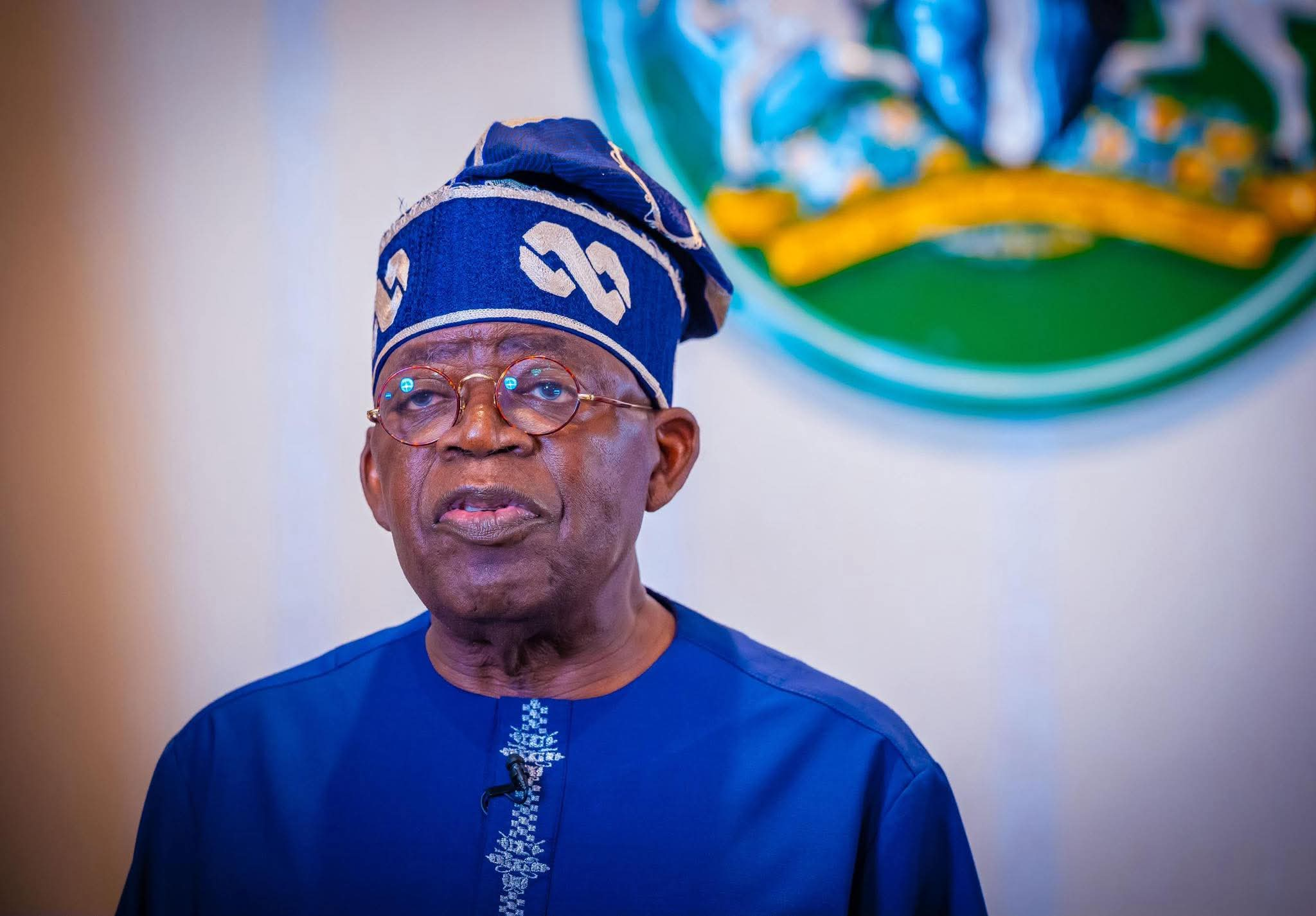
President Bola Tinubu has said that the tough economic reforms introduced by his administration over the past three years have stabilised Nigeria’s economy and positioned the country for sustainable growth.
The President said his government inherited severe economic and structural challenges in May 2023, including unsustainable fuel subsidies, exchange-rate distortions, rising debt-servicing costs, insecurity and declining public confidence in institutions.
Tinubu stated this in a nationwide address on Friday to mark the third anniversary of his administration.
According to him, the administration took difficult but necessary decisions, including the removal of petrol subsidy and unification of foreign exchange windows, to prevent fiscal collapse and restore economic stability.
“At the height of the subsidy regime, Nigeria was spending as much as ₦18.4 billion daily to sustain petrol subsidies, while multiple exchange rate windows encouraged arbitrage and rent-seeking,” he said.
Tinubu acknowledged the hardship caused by the reforms, particularly the rising cost of living, but assured Nigerians that their sacrifices were yielding positive results.
“I remain deeply conscious of those sacrifices, and I assure you: your sacrifice has not been in vain.
“Today, I can say with confidence that Nigeria has stabilised and is moving forward again,” he said.
The President said investor confidence had improved significantly, citing growth in the Nigerian stock market, increased public revenues and stronger fiscal positions for states and local governments.
He said major infrastructure projects, including the Lagos-Calabar Coastal Highway, Sokoto-Badagry Super Highway, Abuja-Kaduna-Zaria-Kano Road and East-West Road, were progressing across the country.
According to him, more than 2,700 kilometres of highways and major roads are currently under construction, reconstruction or rehabilitation.
