






Top Headlines

Anti-Graft War: EFCC Flags Corruption as ‘Real Elephant’ Fuelling Insecurity

Published on December 22, 2025 | By Admin

Share with friends:

news

The Chairman of the Economic and Financial Crimes Commission (EFCC), Mr Ola Olukoyede, has called for greater public accountability as a critical tool in Nigeria’s fight against corruption, saying it is central to restoring national stability and economic prosperity.

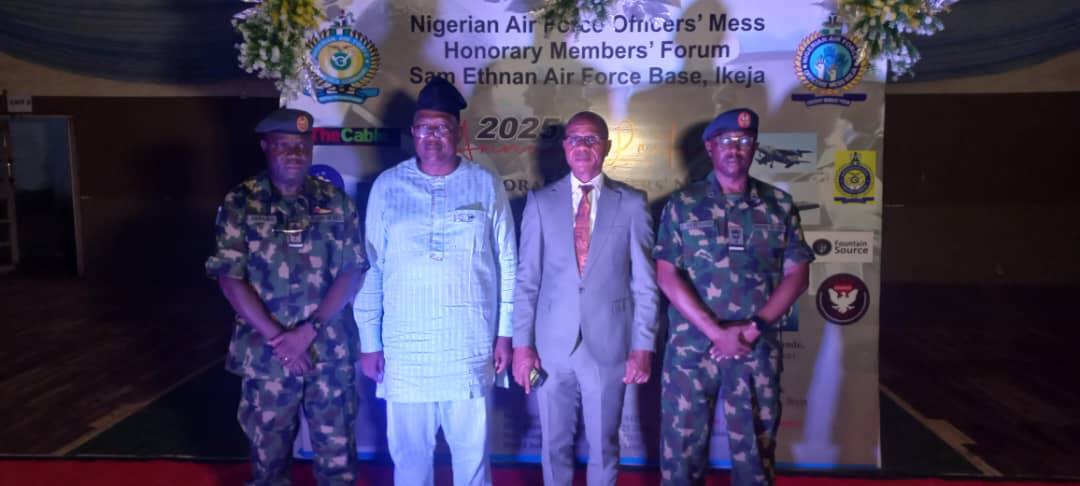
Olukoyede made the call on Friday, Dec. 19, 2025, while presenting a paper titled “Corruption, National Security and Economic Prosperity” at the Annual Lecture Series of the Nigerian Air Force Officers Mess Honorary Members’ Forum in Lagos.

Represented by the EFCC’s Director of Public Affairs, Commander of the EFCC, CE Wilson Uwujaren, the chairman said weak accountability in the management of resources across the public and private sectors was deepening corruption nationwide.

While acknowledging that religious extremism, ethnic rivalries and self-determination agitations are often blamed for insecurity, Olukoyede said corruption remained the “real elephant in the room.”

According to him, corruption fuels insecurity when funds meant for national defence are stolen or when resources intended to alleviate poverty are diverted by members of the ruling elite.

He criticised the abuse of security votes, describing them as opaque channels for siphoning public funds, and cited the prosecution of a former governor accused of diverting more than N4 billion in security votes.

Olukoyede said the EFCC contributes to counter-terrorism efforts through non-kinetic measures aimed at blocking the flow of illicit funds to criminal networks, including monitoring designated non-financial institutions and Bureau De Change operators to curb money laundering and illicit financial flows.

He added that the commission also monitors the activities of local and international non-governmental organisations in the North-East to prevent their use as fronts for subversive activities, while collaborating with anti-corruption agencies across West Africa under the Network of Anti-Corruption Institutions in West Africa (NACIWA).

The EFCC chairman noted that asset recovery efforts by the commission had yielded substantial funds and properties, supporting Nigeria’s economic recovery, with parts of the recovered assets invested in social programmes such as the students’ loan scheme and consumer credit initiatives.

He said the commission also supports the Central Bank of Nigeria’s monetary policies by combating currency racketeering, mutilation of the naira and dollarisation of the economy, actions which he said had helped ease pressure on the naira.

Olukoyede further disclosed that upon assuming office, the commission adopted a policy of not shutting down businesses under investigation to preserve jobs and livelihoods, a move he said had positively affected hundreds of households during recent economic challenges.

He added that the EFCC tracks budget releases and utilisation in key ministries, departments and agencies through its Department of Fraud Risk Assessment and Control to block fund diversion and improve resource efficiency.

In his remarks, the Chairman of NAFOM-HMF, Ikeja, Dr Goke T. Akinrogun, commended the EFCC chairman for what he described as an enlightening lecture, while the Chief Host, Air Commodore Ewejide Akintunde, praised the forum for sustaining impactful discussions over the past six years.


Enjoyed this article? Share it with friends!