






Top Headlines

FG Approves 40% Salary Increase for Lecturers, N1.7m Annual Allowance for Professors

Published on January 16, 2026 | By News Desk

Share with friends:

news


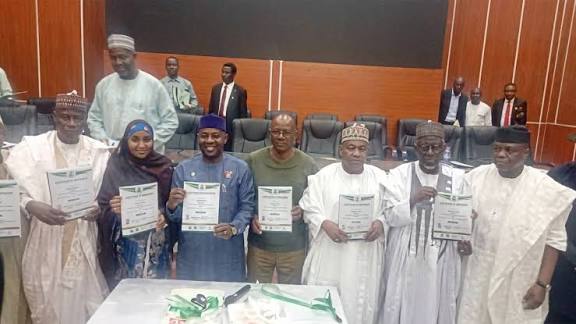
The Federal Government has approved a 40 per cent pay rise for university lecturers, alongside an additional N1.74 million annual allowance for professors, following a new agreement with the Academic Staff Union of Universities (ASUU).


The move is expected to end years of industrial unrest and stabilise Nigeria’s tertiary education system.


The agreement, unveiled by Minister of Education, Dr Tunji Alausa, was approved by the National Salaries, Incomes and Wages Commission (NSIWC) and takes effect from January 1, 2026.


Dr Alausa said the increase aims at “boosting morale, improving service delivery, enhancing global competitiveness, and curbing the persistent brain drain affecting Nigerian universities.”


Under the revised framework, lecturers’ pay will be structured around the Consolidated University Academic Staff Salary (CONUASS) and a new Consolidated Academic Tools Allowance (CATA), which covers professional expenses such as journal publications, conference participation, internet access, and book allowances.


The agreement also introduces a Professorial Cadre Allowance for full-time Professors and Readers.


Under this structure, Professors will receive N1.74 million per year, while Readers earn N840,000 annually.


Dr Alausa described the intervention as “structural, practical, and transformative,” designed to enable senior academics to focus on teaching, mentorship, research, and innovation.


ASUU President Prof. Chris Piwuna welcomed the agreement, calling it a “significant step towards rescuing Nigeria’s ailing university system,” but warned that “deep-seated structural challenges still threaten its sustainability.”


He noted that the agreement ends a long struggle that “ought to have been concluded more than a decade ago.”


Negotiations for the 2025 agreement date back to 2009, with several committees over the years—including those led by Wale Babalakin (2017), Munzali Jibrin (2021), and Nimi Briggs (2022)—failing to reach a consensus.


Meaningful progress only began after the Yayale Ahmed-led committee was inaugurated in October 2024, culminating in the current agreement.


Enjoyed this article? Share it with friends!