










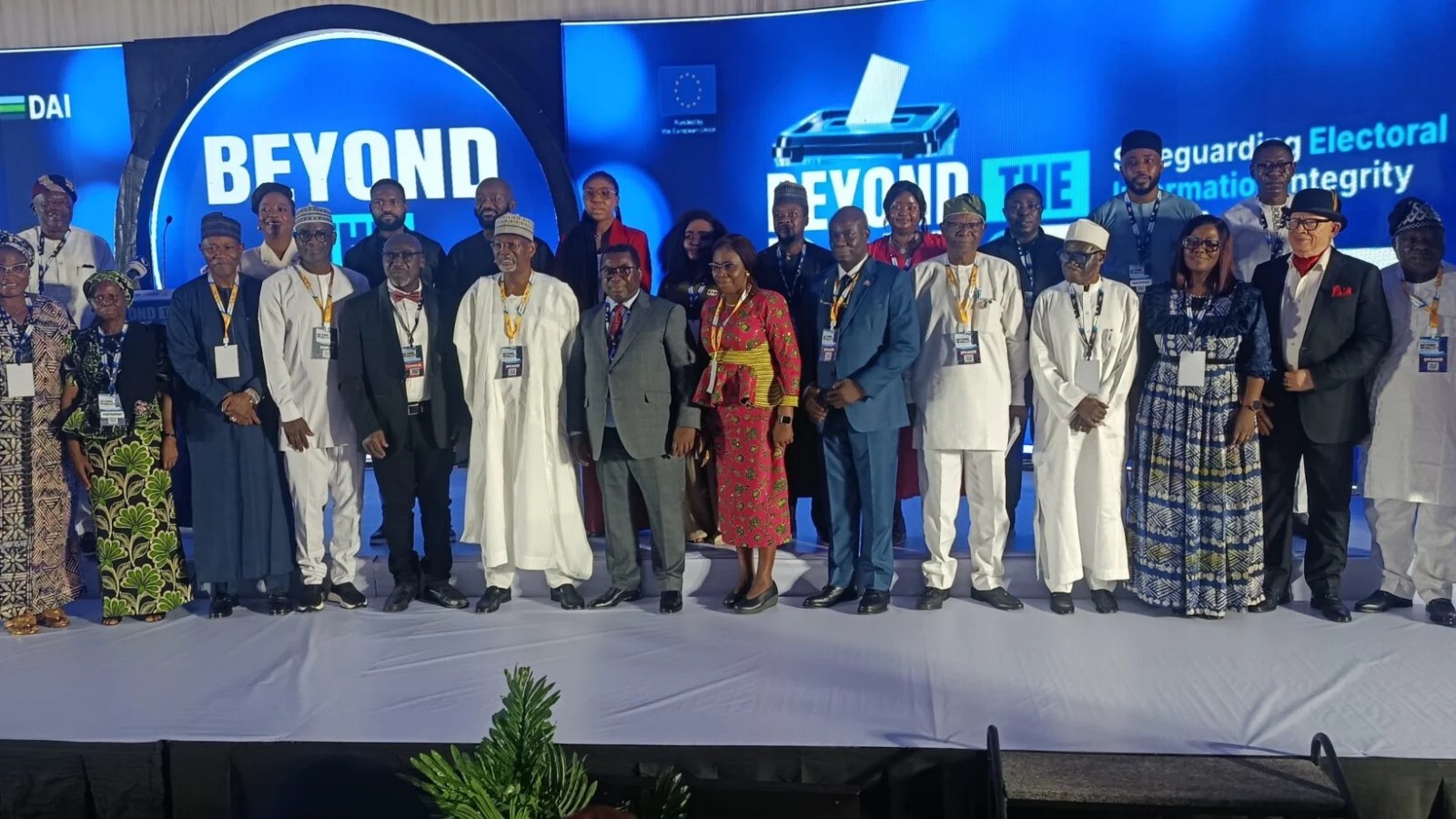
The European Union (EU) and the International Press Centre (IPC) have warned against the growing threat of information manipulation, deepfakes, and Artificial Intelligence (AI) and generated political disinformation ahead of Nigeria’s 2027 general elections.
The EU Ambassador to Nigeria and ECOWAS, Gautier Mignot and the Executive Director of the International Press Centre (IPC) Dr. Lanre Arogundade, stated this on Monday at the opening of a two-day Summit on Electoral Information Integrity in Abuja.
The News Agency of Nigeria (NAN) reports that the theme of the two- day event is “Beyond the Ballot: Safeguarding Electoral Information Integrity in the Age of AI”.
In his remarks, the EU ambassador to Nigeria and ECOWAS, emphasised the need for protecting the integrity of electoral information so that citizens could freely make their choices.
He urged stakeholders to build an electoral and information environment in which reliable information is available, institutions communicate credibly, independent journalism could flourish, and manipulation meets a prepared response.
“An election can be undermined without a single ballot being altered. A fabricated announcement can send voters to the wrong location.
“A false claim about results can deepen suspicion before verified information reaches the public. The immediate target is information; the deeper target is trust,” Mignot said.
The EU envoy noted that information manipulation during election periods is a global phenomenon affecting both Europe and Africa.
He cautioned that while artificial intelligence supported accessibility and translation, it also made deception easier to produce and harder to spot.
“Yet, we should not make technology the whole story.
“A misleading message does not need sophisticated AI to cause harm, nor should uncertainty about whether a recording is AI-generated prevent us from checking whether the instruction it contains is genuine.
“The task is, therefore, broader than detecting deepfakes;
“It is to build an electoral and information environment in which reliable information is available, institutions communicate credibly, independent journalism can flourish, and manipulation meets a prepared response,” he said.
The ambassador highlighted the importance of timely public information, independent fact-checking, and stronger capacity to address harmful content in local languages.
Mignot also outlined three key priorities for Nigeria as it prepared for the 2027 polls.
These, according to him, include early preparedness before pressure mounts, operationalising local and international partnerships, and protecting fundamental democratic rights while safeguarding the information space.
“Election day is too late to establish verification contacts, clarify responsibilities, or agree on who can authorise a public correction. Those arrangements should be developed and tested now,” he said.
He emphasised the need for journalists to retain editorial independence, fact-checkers to remain free to reach their own conclusions.
