










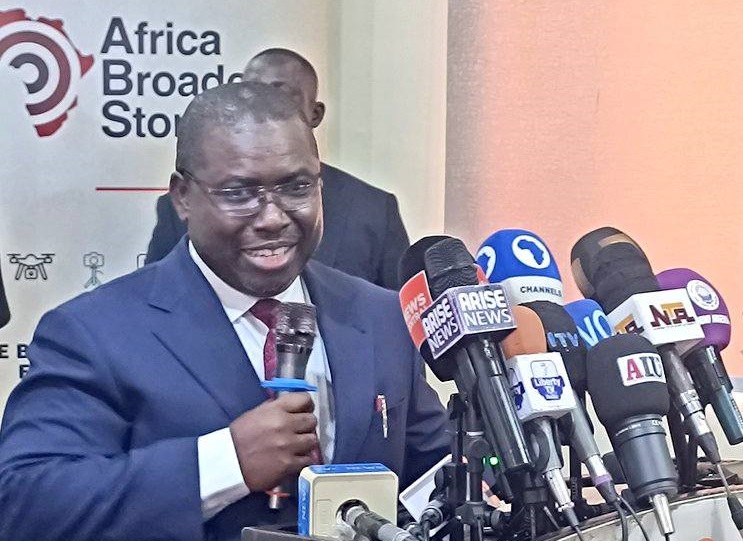
Prof. Joash Amupitan, the Chairman, Independent National Electoral Commission (INEC), has urged broadcasting institutions to provide equal media coverage and visibility for all political parties in the country.
Amupitan gave the advice on Wednesday at the 81st General Assembly and 23rd Annual General Meeting, organised by the Broadcasting Organisations of Nigeria (BON) in Abuja.
He said equal access to media coverage and visibility was imperative to enhance the integrity and credibility of the electoral processes.
He presented a paper entitled “The Management of the Airwaves: An Assessment of the 2026 Nigerian Electoral Act on Broadcast Media Coverage of the Election”.
According to him, equal access to media platform enables voters to receive diverse viewpoints, compare predictable alternatives and make informed choices.
“Without such guarantees, the electoral process risks becoming skewed in favour of those with greater access to media power, thereby undermining both credibility of the elections and legitimacy of resulting governments.
“The first important thing that to note is the regulation of political campaign the media uses, which results to equal access to media platform in electoral processes.
“The key feature of the Electoral Act is emphasis on equal access to media platform, specifically section 99 subsection two to five,” he said.
He quoted the law as providing that state apparatus, including the media, shall not be employed to the advantage or disadvantage of any political party or candidate at any election.
“This is very critical; state owned apparatus must not give advantage whatsoever to any political party.
“Secondly, the law says media time shall be allocated equally among political parties or candidates at similar hours of the day.
“You must manage the time, you must share it humanly. There must be fairness, and that is what we call media justice. That is the provision of the Electoral Act,” the INEC boss said
Amupitan said that Newspapers and other print outlets shape public opinion agenda setting and voters perception, adding that equal coverage helps to ensure that no candidate is systematically marginalised in public discourse.
“Collectively, these provisions give practical effect to the democratic ideals that election must be free, fair and competitive.
